


 275 / 540

THE ITALIAN LEGACY IN THE DOMINICAN REPUBLIC
274
parison to the height of the building. This leaves no question as to its stylistic influence, which is clearly reliant
on the most stereotypical ideas of the era.
The National Palace, in turn, is located in the environs of the Historic and Monumental Center of the city.
This enables us to reflect on Roberto Segre’s statements regarding the Dominican examples as the basis of his
opinions. It is clear that this was possible, because the city’s dimensions were so small that it could only have
been done this way. The city of Santo Domingo’s lack of growth was tied to its economic development, which
consequently hindered a different process from having been possible, either quantitatively or qualitatively.
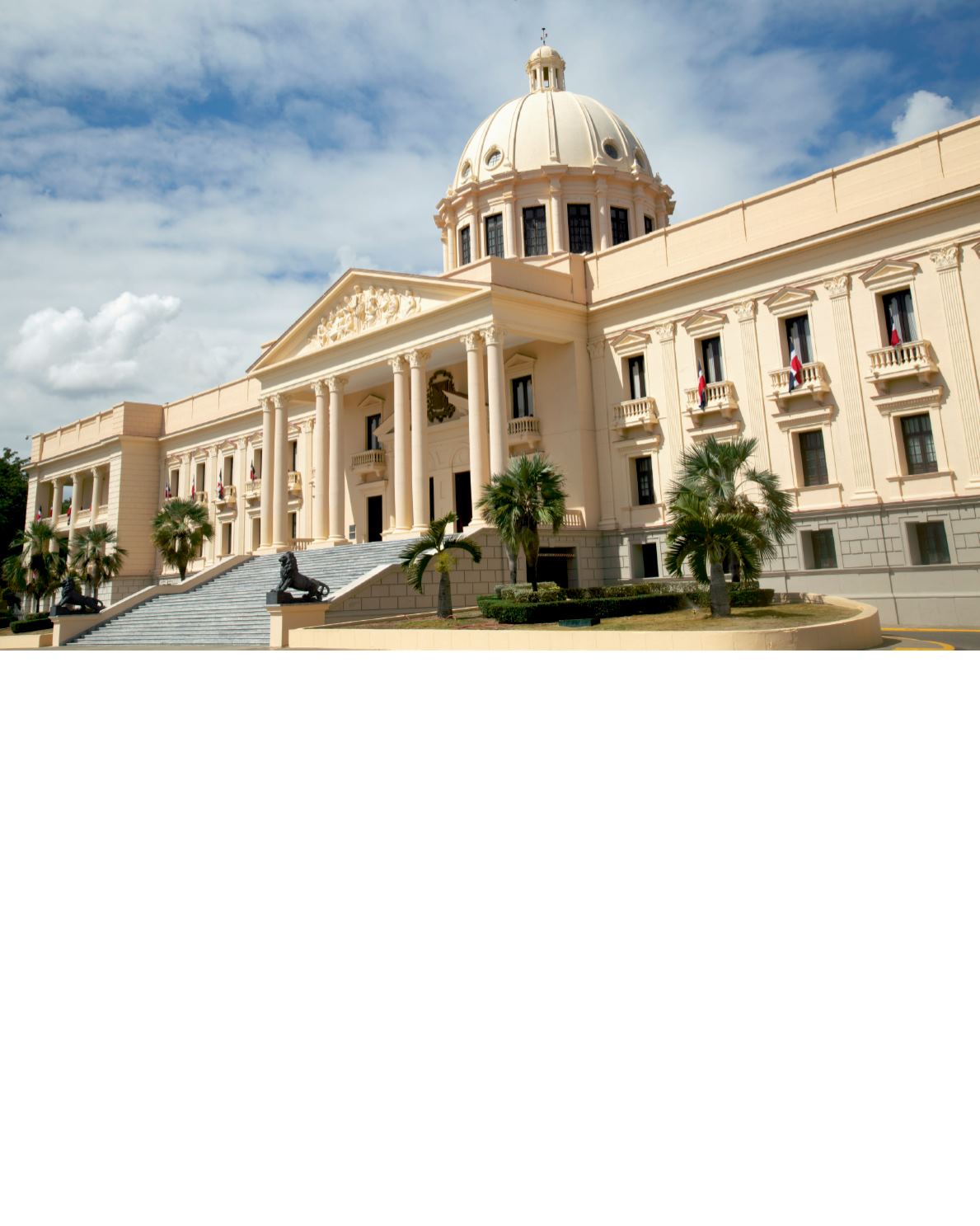
Still, the eclectic historicism of the National Palace clearly and palpably evokes elements of neoclassicism and
an irrefutable Italian tradition. It served as both a visual symbol and a formal representation of long-awaited
stability, balance, security, prestige, pride, Monumentalism, and the serenity or austerity that would confer
significance upon its location. It was also achieved through its almost perfectly symmetrical proportions, at
least in the construction of the four façades. The design of the Palace was created between 1939 and 1944,
and the plan was quite likely influenced by a group of Dominican and foreign architects with a Beaux Arts
education. Among them are the Puerto Rican of Spanish descent, Benigno de Trueba y Suárez (see note 18);
Franco-Dominican Henry Gazon Bona (1907-1982); and the Dominican Humberto Ruiz Castillo (1895-1966),
born in Las Matas de Farfán. Other individuals were also involved in various projects related to the process, its
design, and also its construction.
In an article in the
La Nación
newspaper dated September 16, 1946, a photograph shows a group from the
Association of Engineers and Architects (ADIA) visiting the site during the completion phase of the National
Palace. They were received for a guided visit inside of the Palace by D’Alessandro Lombardi, in addition to
National Palace
modern façade.
© Photo by Ángel Álvarez