


 280 / 540

THE ITALIAN PRESENCE IN SANTO DOMINGO, 1492-1900
279
began working on the Guggenheim Museum in New York in 1946. And in the very year that the seat of the
Government of the Dominican Republic was completed, 1947, Kenzo Tange unveiled the Peace Center in the
demolished city of Hiroshima, the site of an atomic crematorium and a great source of shame for all of human-
ity. On June 7 of that same year, the International Competition for the Basilica Cathedral of Nuestra Señora de
la Altagracia in Higüey was held in Santo Domingo.
31
Meanwhile, the National Palace was unveiled, blessed,
and inaugurated in August 1947.
As can be seen, the planning and construction of the building that is the seat of the Government of the
Dominican Republic is a project that was conceived and developed during periods of war throughout the
world. While North America and Europe battled, the latter saw many of its most magnificent historic sites
destroyed. Meanwhile, the Dominican dictator consolidated his own authority and created icons to buttress
his political propaganda, of which the National Palace was the most representative. It was a subliminal tool for
persuasion designed and built to serve as an unmistakable allusion to the peace, progress, and development
imposed during the world’s vicissitudes that resulted in the bloodshed of humanity. Meanwhile, the individ-
ual that had directed the construction work for such a monumental project had taken ill. Seven years later,
Guido D’Alessandro Lombardi died at noon on March 15, 1954. His remains are found at the Cementerio de
la Avenida Máximo Gómez.
32
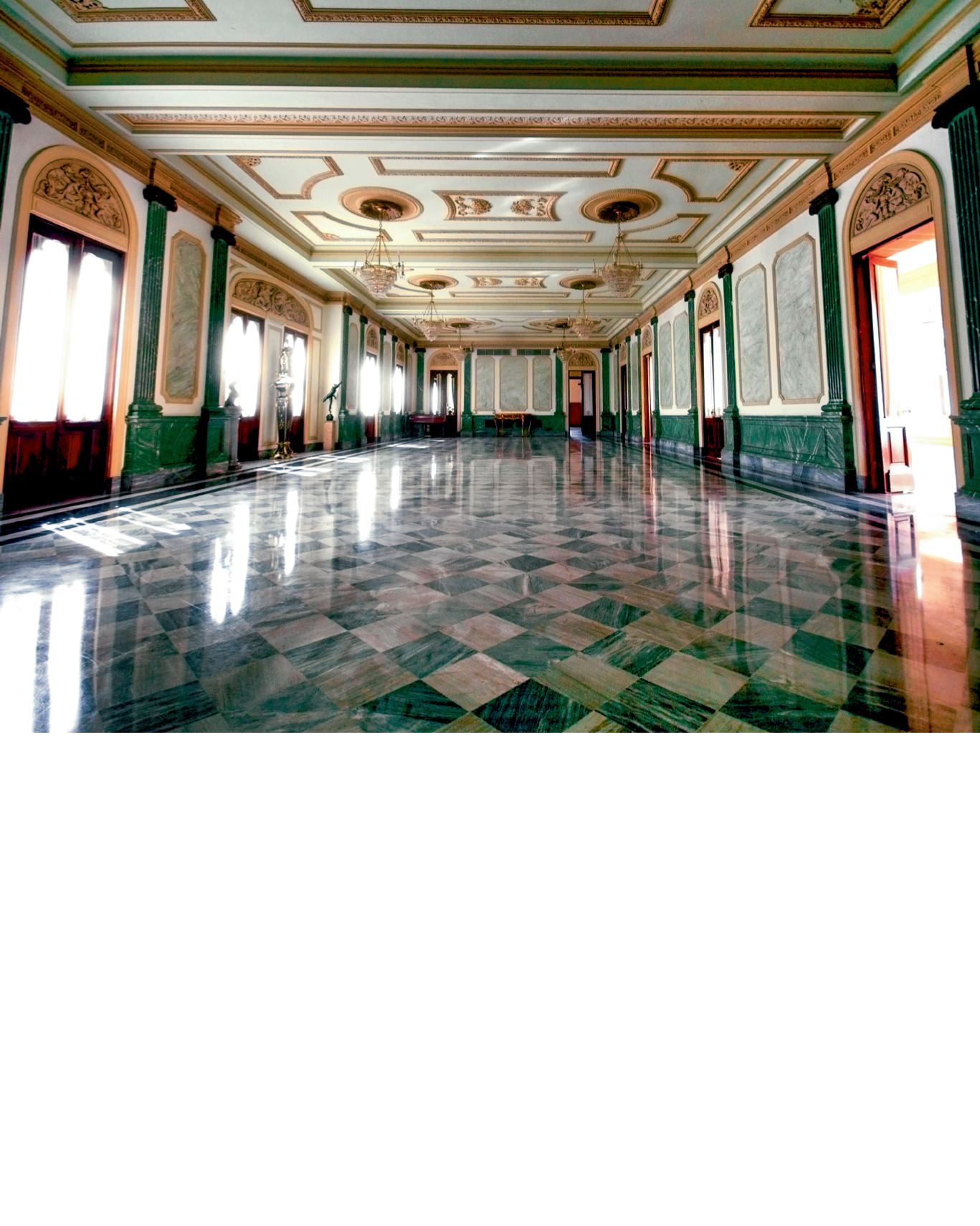
Green Room of the
National Palace.
Designed by the
engineer Guido
D’Alessandro, it was
inspired by the Royal
Palace in Milan.
© Administrative Ministry
of the Presidency