


 418 / 540

417
of turpentine, resins, gums, substances, colorants, etc.); 4) special courses in the College of Agriculture, for
students, and informational workshops, writing pamphlets, etc.”
Hydrobiology Section
This section addressed the “problem of the biological study of waters” in consideration of the country’s
needs. It is divided into two great chapters: “Fresh Water” and “Salt Water.” The first division covers knowl-
edge about existing fish in the Republic, their connection to the battle against paludism, and the “antimalarial
value of these different classes.” It also embraces information about food fish and the value of each class, for
internal use or for manufacture and export (p. 10).
As related activities, the Report recommends setting up ponds stocked with native antipaludic fish but us-
ing imported fish if necessary. Other hatcheries are for fine food fish, whether indigenous or introduced from
the exterior. Ciferri also mentions hatcheries in association with irrigation, for which the Section would work
in coordination with the head of the National Irrigation Service. Ciferri highlighted three orders of problems:
a) antipaludism (prevention of malaria), adding “mosquiticide fish” to the irrigation system and using other,
indirect means such as “planting eucalyptus, planting chara (algae), and planting aquatic Coleoptera and He-
miptera that devour mosquito larvae”; b) introducing fish into the irrigation system; and c) in the irrigation
canals, controlling algae and green plants that could obstruct the flow of water (p. 11).
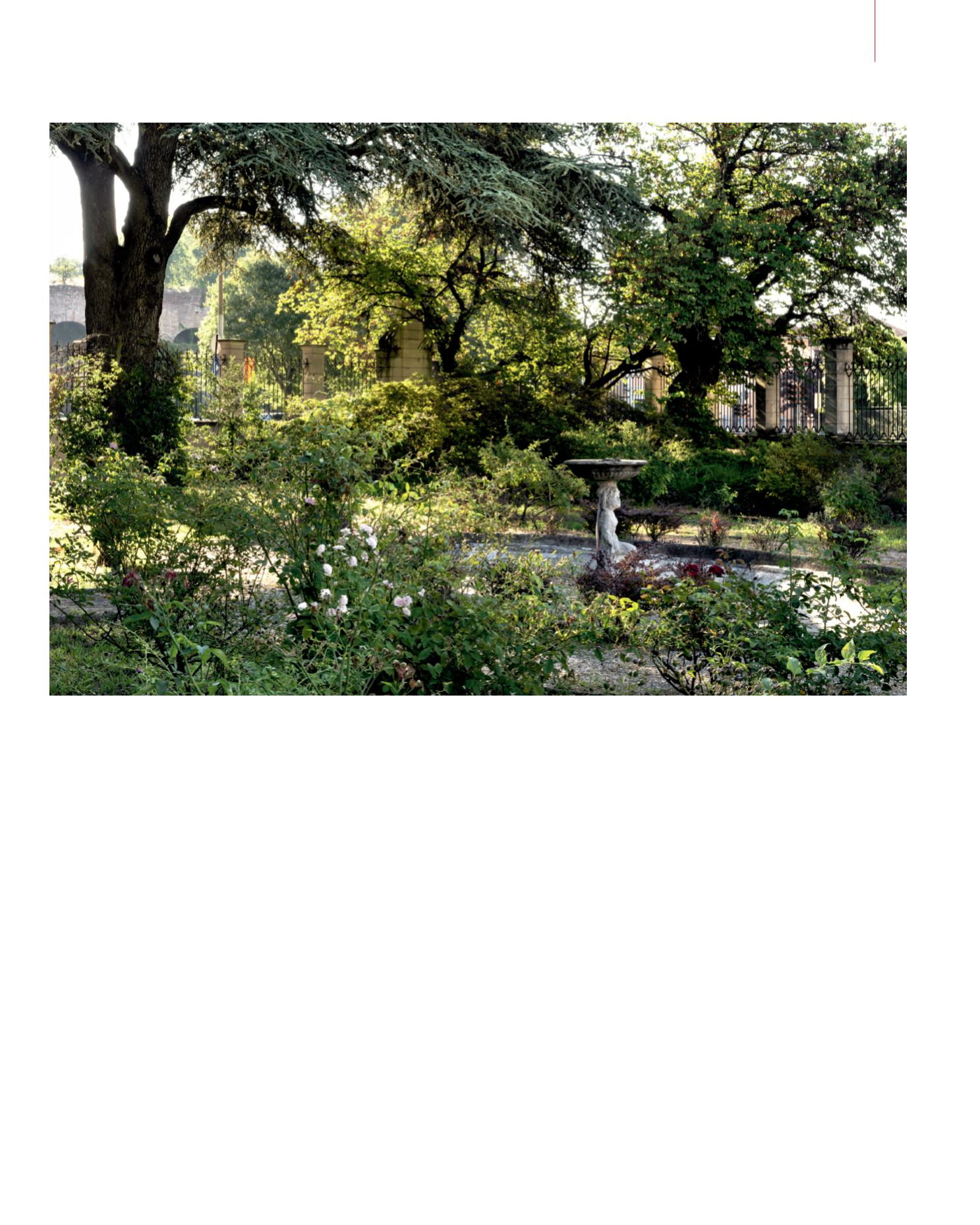
Oval Fountain: during
the intallation of
the historical rose
garden and the main
façade, Ciferri placed
many fountains,
integrating the
botanical collections
with a classic decor
connected to the
element of water.
(Paolo Cauzzi)
© Andrea Vierucci
DR. RAFFAELE CIFERRI’S CONTRIBUTIONS IN THE DOMINICAN REPUBLIC