


 419 / 540

THE ITALIAN LEGACY IN THE DOMINICAN REPUBLIC
418
With regard to salt water, there are “problems of lack of knowledge about salt-water fish,” as to their ben-
efits as comestible fish, but also aimed at the protection of marine fauna by means of “regulating the catching
of hawksbill and other turtles for their shells,” as well as “studying the possibilities of other industries derived
from the sea,” such as the industry of sponges, mother-of-pearl, and coral, always with regulations. The mis-
sion would not be the research alone but also the performance of “practical demonstrations in different parts
of the coast of the Republic, with different classes of fish prepared in different ways” (p. 12). The National
Agronomic Station of the Dominican Republic, had it maintained this project, would have been the pioneer in
the Caribbean region by possessing a department of agronomic hydrobiology.
Mycological Exploration
As head of the Phytopathologic and Mycological Section, Ciferri was in charge of the first mycological ex-
ploration in the republic. Initially, a small number of fungus samples was collected and sent to Dr. Carlos
E. Chardón, Commissioner of Agriculture in Puerto Rico, “to whom,” Ciferri admits, “are owed important
contributions to our knowledge of Dominican mycoflora.” Also, from Puerto Rico and other countries in
the exterior, mycological material arrived that was then studied in the laboratory of the National Agronomic
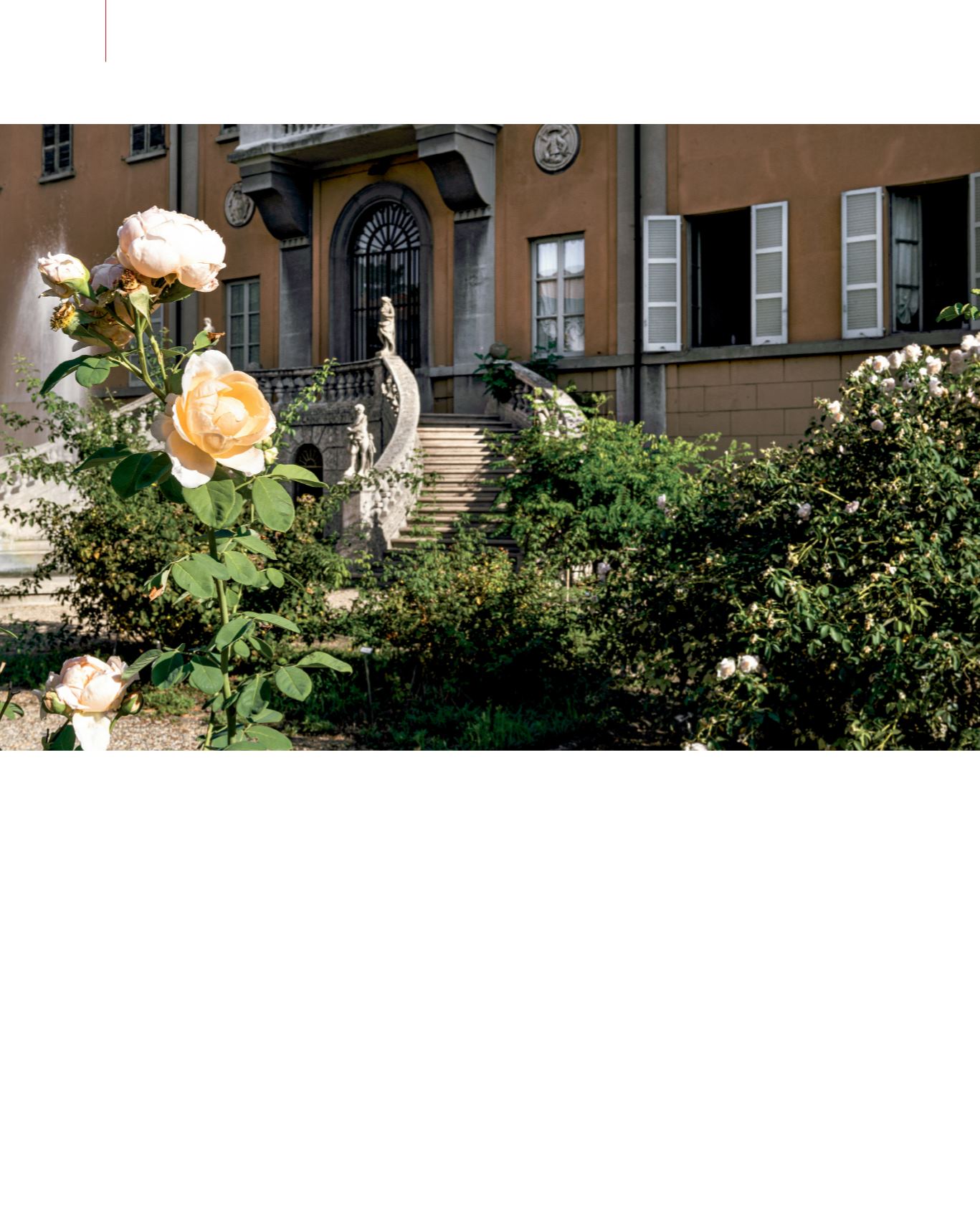
Detail of the staircase
of the fountain in the
historic rose garden
created by Ciferri with
a semicircle shape by
placing the staircase
that represents the
main façade of the
building, emphasizing
the great fountain.
(Paolo Cauzzi)
© Andrea Vierucci