


 87 / 540

THE ITALIAN LEGACY IN THE DOMINICAN REPUBLIC
86
The majority of Italians established businesses dedicated to the import trade
139
and some workshops of
relative significance,
140
while also engaging in a range of service-related occupations and craft activities,
141
such
as clothing salesmen, produce salesmen,
142
peddlers,
143
jewelers,
144
shoemakers,
145
bricklayers,
146
silversmiths,
147
and photographers.
148
Of these professions, the first Italian immigrants were initially engaged as peddlers, as
were immigrants from the Middle East. In this activity, which did not require training, capital, or language
skills,
149
they used regional mobility as their principal strategy, locating themselves in the cities where the
greatest opportunities were to be found. In 1889, in a session of the City Council, it was pointed out that
peddlers and traveling jewelers made Santiago the “place of their residence and center of their trade,” which
reveals a preference for development of this profession.
150
Attracted by these favorable conditions, in 1891, and
armed with peddlers’ licenses issued by the La Vega municipality, Santiago Santos Garlotte, Pascual Marino,
Luis Paonesa, José Rossi, Alejandro Caputo, and Carlos Grisolía arrived in Santiago.
151
There were also some Italians employed by third parties,
152
as well as by tailors,
153
shoemakers,
154
umbrella
stands,
155
watchmakers,
156
artisans,
157
gardeners,
158
mercers,
159
and grocers.
160
Some went on to form small man-
ufacturing companies of some significance, such as Las Tres Estrellas shoe factories, operated by the Barrella
brothers, and later by Barrella and Fersola (1908),
161
on Calle General Cabrera,
162
which produced shoes with
an iconic three-star insignia on the sole,
163
and La Marchantón owned by the Pugliese brothers (Vicente and
José)—named after the nickname of his father Nicolás Pugliese, who founded it in 1899—on Calle Duarte,
next to the notary office of Joaquín Dalmau.
164
The most important Italian commercial establishments in Santiago were the Divanna, Grisolía y Co.,
established in 1885, which was headquartered in Puerto Plata and dedicated to the export of coffee, cacao,
tobacco, and wax, and the import of European and American provisions and merchandise, and the Grisolía,
Cino y Co., founded in 1897, also based in Puerto Plata, and importer of merchandise and provisions.
165
The assets and liabilities of the Divanna, Grisolía y Co. in Santiago were assumed in 1907 by Pedro Russo
Dipuglia, native of Santa Domenica Talao,
166
who eventually renamed it under his own name,
167
and with such
success that the enterprise was expanded to Moca.
168
After Russo died in Santiago in 1909,
169
his corporate suc-
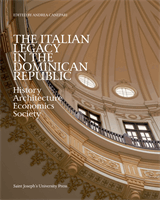
Anselmo Copello.
Ambassador of the
Dominican Republic to
the United States.
© Edwin Espinal
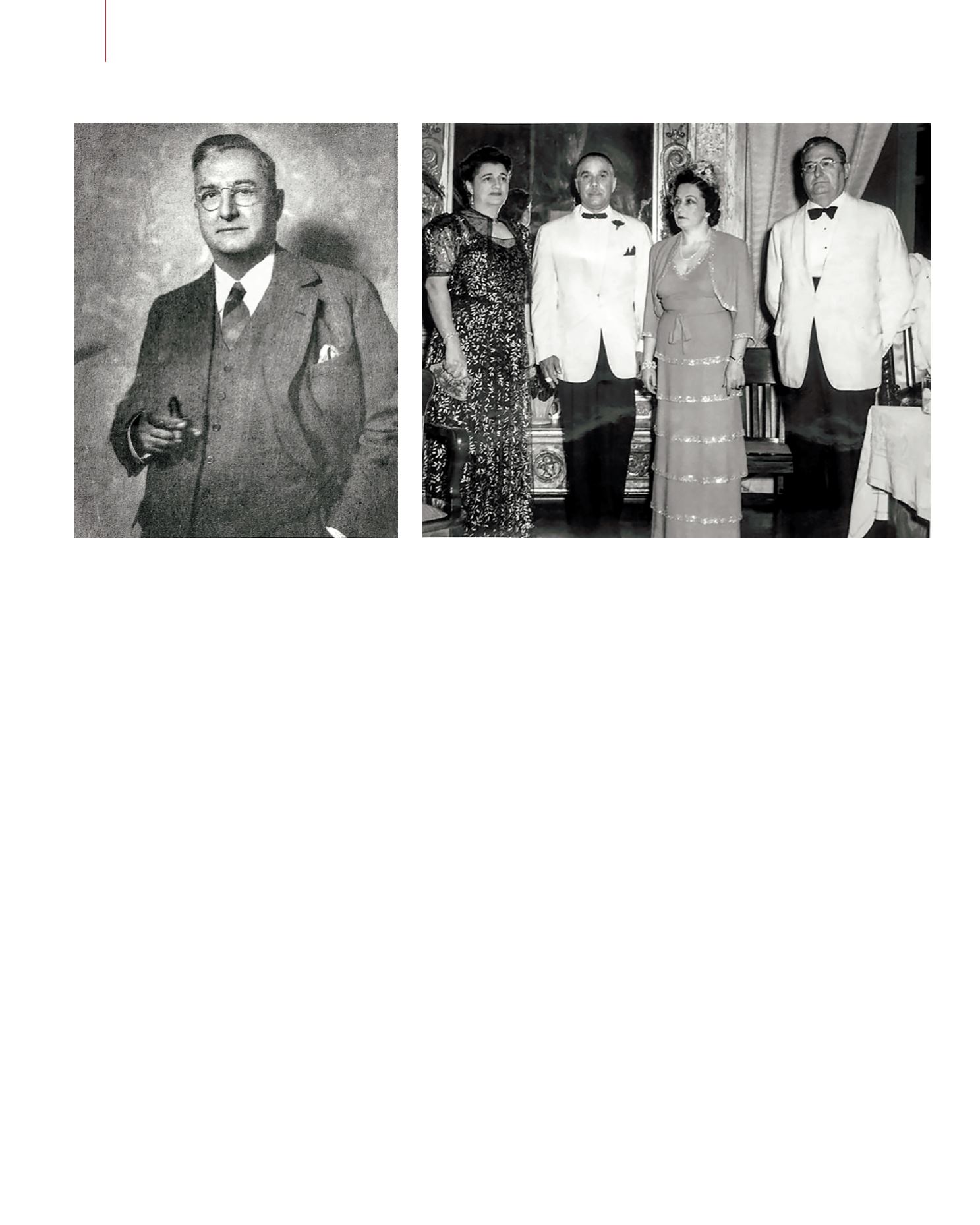
Anselmo Copello and
his wife Argentina de
Soto with President
Rafael Leónidas
Trujillo Molina and his
wife María Martínez
at the Santiago
Recreation Center.
© Edwin Espinal