


 90 / 540

89
Outside of this nucleus of associations, the positive currents of social empathy the Italians gave and re-
ceived helped them to integrate easily into Santiago society, and without having to live in a separate area
in order to preserve their identity. Having common roots, such as speaking a Latin-derived language, was a
catalyst for the fusion of values. Contrary to the case of the Middle Eastern immigrants, there were practical-
ly no cultural barriers or prejudices against the Italians, although, like all immigrants, they suffered through
processes of adaptation.
This integration with the native Dominicans, as opposed to forced isolation, was manifested even among
the elite, who opened the doors of their clubs and lodges to the Italians. Their acculturation, however, rarely
translated into a need to transmit the Italian language to their children. Although Italian could be their natural
mode of communication, and could be understood by their descendants, parents did not demand that their
ancestral language be learned and used, which led to a generalized use of Spanish. On the other hand, their
love for the homeland and its traditions, combined with a natural tendency to remember with nostalgia the
towns and villages of their childhood or youth, led some to retain their nationality and baptize their children
with names like Italia, Roma, Víctor Manuel, and Patria.
Worth noting as unique contributions by the Italians in the Cibao during the second half of the twentieth
century are the construction, around 1958, of the Nagua-Sosúa and Guananico-La Isabela roads, in the prov-
inces of María Trinidad Sánchez and Puerto Plata, for the Conti Alasi company; of the Puerto Plata cable car
by the Ceretti e Tanfani company in 1972;
203
and of the aqueduct for the city of Santiago in 1977 by a company
known as Italconsult.
Many Italians participating in these works subsequently settled in the Dominican Republic, including Gi-
useppe Cavoli Marchetti, who was born in Vignola, Modena, in 1934, and who came to the country from
Venezuela in 1955 as a heavy machinery mechanic for Conti Alasi for the construction of the Nagua-Sosúa
highway. He married Rosa Delia Balbuena, a native of Río San Juan, and died in 2010. They were the parents
of Jorge Hugo Cavoli Balbuena (Santo Domingo, December 11, 1969), who was elected mayor of the munic-
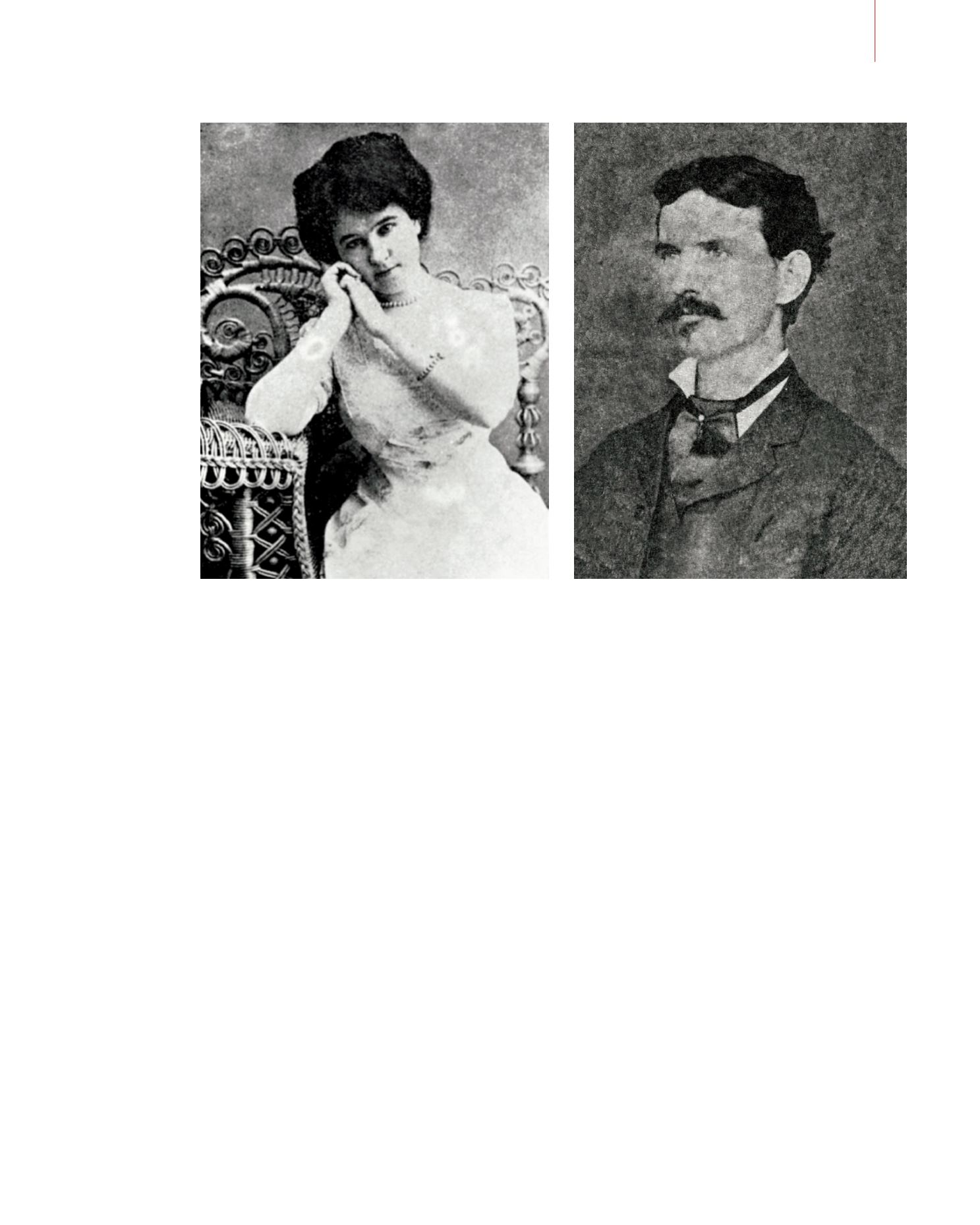
María Stefani
Espaillat.
© Edwin Espinal
Pilade Stefani.
© Edwin Espinal
THE ITALIAN PRESENCE IN THE CIBAO REGION AND IN SANTIAGO DE LOS CABALLEROS