


 247 / 540

THE ITALIAN LEGACY IN THE DOMINICAN REPUBLIC
246
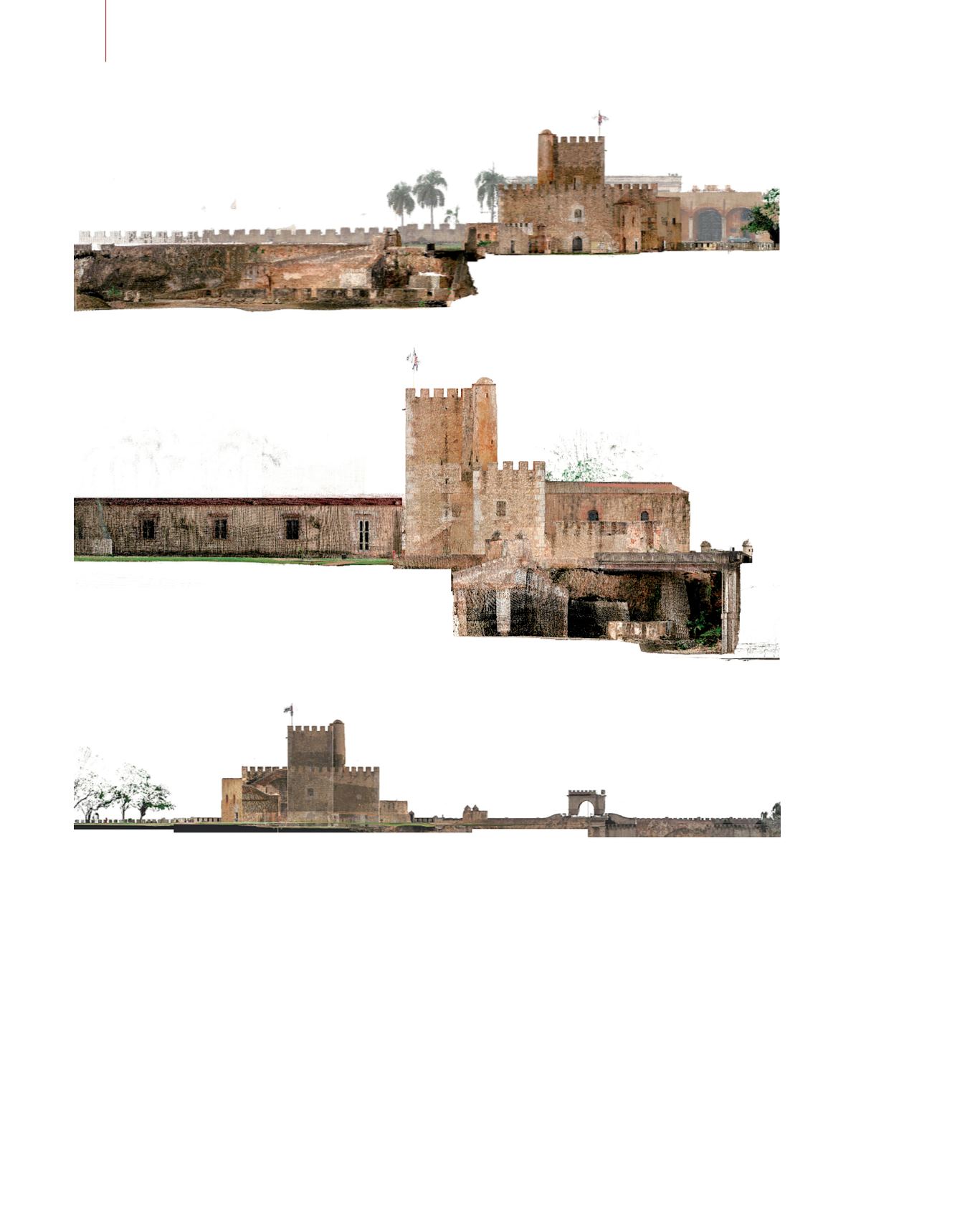
Sections processed
by point clouds of
the Ozama Fortress
complex. The
defensive system,
composed of the
tower and the
lower battery, are
surrounded by a
large walled park and
separated from the
river by a panel of
concrete walls built
during the modern
era, which hide the
rocky wall on which
the batteries, the
windows, and in
general the military
architecture are found,
which was considered
in the past to be too
modest to represent
the grandeur of the
capital.
© Sandro Parrinello
intangible patrimony is capable of explaining—through drawing and the explanation of independent models
governed by science—the cultural substrate necessary for framing a particular context.
The technological development that we are experiencing in this age is conditioning the techniques and
the applications of documentation processes. But it also leads to a general process of reconsidering the deeper
meaning of knowledge and the multiple paradigms that arise from it when speaking about a system for the
development, management, and improvement of patrimony. New systems of representation produce new
legal expectations for digital communication, changing the objectives and constantly renewing the application
in analytical terms of cognitive needs and also in response to the more legal need for the computational na-
ture of interaction with these same models, which are capable these days of providing responses that are both
quantitative and qualitative. This phenomenon is guiding the professional and academic world in bringing
itself up to speed about production methods for new output, obtaining multi-data products and complex files
for information capable of handling multiple purposes at the same time.