


 48 / 540

THE ITALIAN PRESENCE IN SANTO DOMINGO, 1492-1900
47
The Treasury books show that the government purchased various items from Canevaro that included
goods as varied as scales, reams of paper, twine, wheat flour, and jugs of oil. Canevaro, like other foreign mer-
chants, imported goods from Genoa, Curaçao, Paris and elsewhere in France, England, and Saint Thomas. An
example of the variety of items that the Casa de A. Canevaro y Cía company sold to the public is an advertise-
ment about “novelties” published in the
Official Gazette
on March 28, 1872, in which it stated that these goods
had been imported from France and England via Curaçao and that they had arrived aboard the schooner
Isabel. The list is rather varied:
panseburro
woolen hats, children’s shoes, boots for women, slippers, spools of
yarn, colored muslin, white and colored linens, “Prussian” style garments, white madapollam, yellow cotton,
towels, white cotton stockings, spools of thread, Bogotá-style garments, cotton blankets, stiff drilling, superior
white drilling, children’s stockings, various sorts of men’s stockings, stockings for women, white cotton shirts
for men, handkerchiefs, as well as a wide variety of items and edible goods, that they have in stock in their
warehouse. In the earliest documents that we have found, Canevaro was carrying out his business under the
company name Nicolás Canevaro y Cía, which he later changed to A. Canevaro y Cía.
The importance of the Canevaro brothers, and Nicolás in particular, is not only based on their wide range
of business that they carried out in Santo Domingo and Genoa, but also for having been responsible for the
arrival in the Dominican Republic of a young man born in Zoagli in 1847, who would later become the found-
er of the country’s main corporate dynasty: Juan Bautista Vicini Cánepa, known more familiarly as Giobatta.
Giobatta arrived in the Dominican Republic somewhere between twelve and thirteen years of age (between
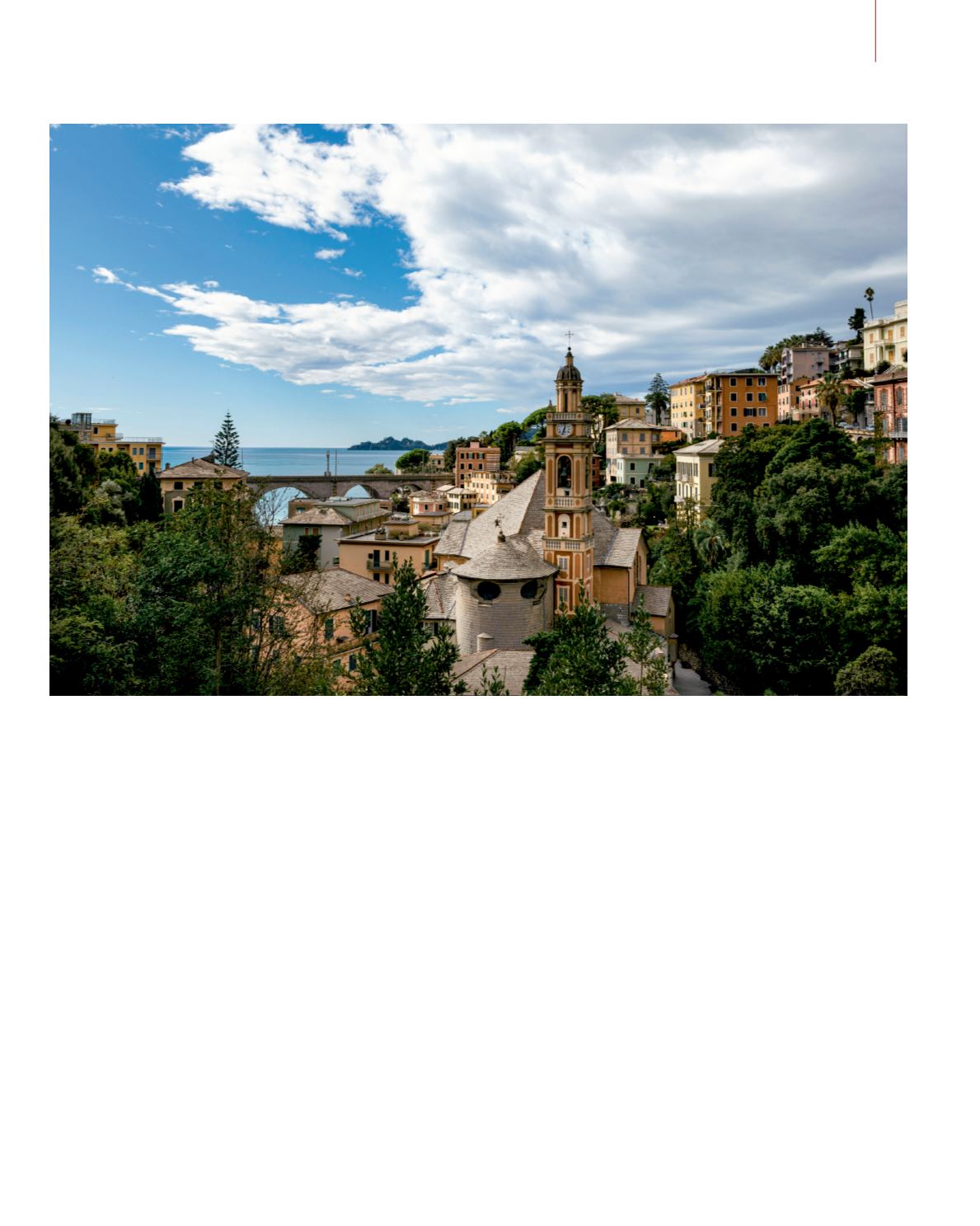
Zoagli, Liguria,
where the Vicini
family originates.
© Andrea Vierucci