


 46 / 540

THE ITALIAN PRESENCE IN SANTO DOMINGO, 1492-1900
45
duced on the island—virtually all of it harvested in the western part—was sent to North America. Meanwhile
Europe received shipments of cacao, as well as timber (mahogany and other trees, including guaiacum, which
was rather favored by the shipbuilding industry). Almost all of the tobacco and a large portion of the timber
came from the eastern part of the island populated by Dominicans.
In the aforementioned maritime ports, small trading settlements began to take hold and were made up
of individuals of different nationalities, including Sephardic Curaçaoan, North American, English, German,
Dutch, and Genoese merchants. The Genoese population in Santo Domingo controlled the timber trade and
was solidly established in the export and import business. Many of its members were the owners of schooners
and brigantines with which they crossed the ocean to carry mahogany and guaiacum, leather, tallow, and wax
primarily to the ports of Genoa and Liverpool. Most goods of all sorts came mainly from Europe, especially
those manufactured in Italy such as olive oil, wine, utensils, ironware, and textiles.
In 1844, the year of the foundation of the Dominican Republic, the most prominent Genoese in the small
commercial world of Santo Domingo were the brothers Juan Bautista and Luis Cambiaso, Juan Bautista Mag-
giolo, Nicolás and Antonio Canevaro, and all of the owners of schooners. Juan Batista Pellerano Costa, a re-
nowned government lender, was also eminent.
When the Haitian army invaded the Dominican territory in March of that year, to attempt to prevent the
separation of the eastern part of the island, Cambiaso, Maggiolo and Juan Alejandro Acosta lent their ships
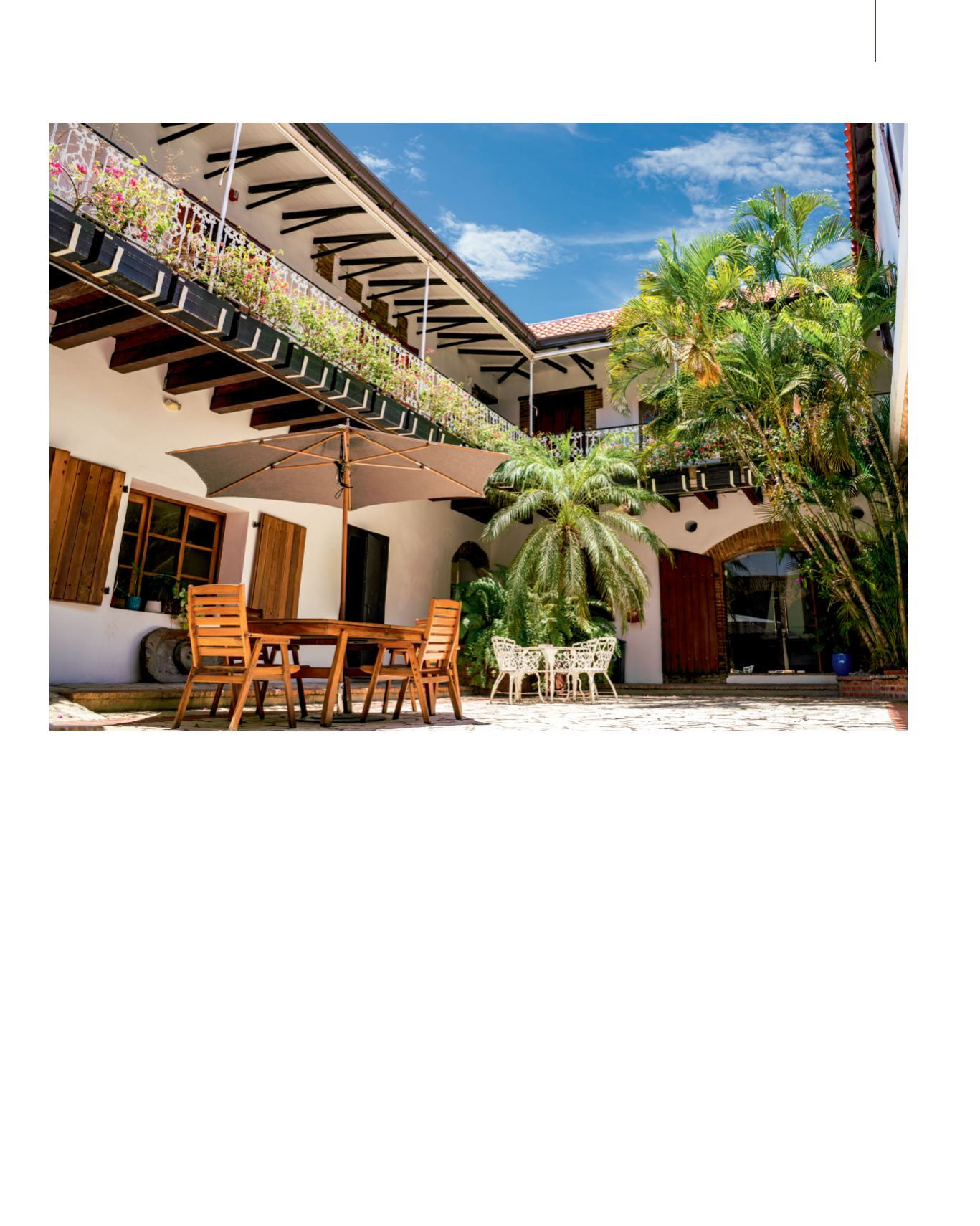
The central patio of
Casa Vicini. The exit
overlooks Isabel la
Católica Street (Isabella
the Catholic Street,
formerly known as
Del Comercio Street
(Commerce Street)
Santo Domingo.
© Giovanni Cavallaro / Casa
Vicini / Inicia