


 332 / 540

331
ITALY’S INFLUENCE ON DOMINICAN ART
cluding
I cactus non temono il vento. Racconti da Santo Domingo
(Feltrinelli, Milan, 2000); and
Onde, farfalla e aroma
di café
(Edizioni Estemporanee, Alessandria, Italy, 2005). In 2005, the famed Dominican photographer Polibio
Díaz participated in the Venice Biennale. In June 2006, Dominican Culture Week was held in the Italian city of
Fuggi, which featured films, plays, talks, and artisan exhibitions, with the aim of disseminating Dominican art,
culture, and history. In November of the same year, Italian Culture Week was celebrated in Santo Domingo.
These events were sponsored by the mayors of both cities and by the corresponding tourist offices. In 2007,
the artists Attilio Aleotti (Italian) and Ángela Hernández (Dominican) launched a photographic exhibition
titled
De Lo Nimio
[Poetic], which was held at Casa de Italia in Santo Domingo and also at the Ducal Palace in
Pavulo nel Frignano in 2008. In 2011, the Dominican Ministry of Culture issued the bilingual anthology (Span-
ish and Italian) of Dominican poetry,
Cantos del aire. Antología de poesía dominicana contemporánea
(Milan: SE
Ediciones). This anthology was translated and edited by the Italian Emanuele Bettini
8
and featured the works
of twenty-two Dominican poets. In 2017, the Autonomous University of Santo Domingo (UASD) awarded
the title of Honorary Professor to the literary critic and scholar Giovanni Di Pietro for his contributions to the
analysis of Dominican literature. Di Pietro, a second-generation Canadian of Italian descent, has also lived and
taught in Santo Domingo.
Returning to the visual arts, some of the most noteworthy works executed by Italian artists in the Domin-
ican Republic include the marble statues of the Founding Fathers—Duarte, Sánchez and Mella—created by
the Italian Nicola Arrighini (1905-1977) in 1976, and located inside the National Pantheon. Likewise, the mon-
umental entrance door of the Cathedral of Our Lady of Altagracia in Higuey, made of bronze with a layer of
24-carat gold plating, was executed in 1988 by Tommaso Gismondi (1906-2003), a prominent Italian sculptor
of religious images.
Below we will refer to the connections between Dominican artists and Italy based on two situational cri-
teria: family ties, which will include Italians who decided to live in the Dominican Republic and those who,
having been born in the Dominican Republic, are descendants of Italians; as well as those artists who lived
or received their training in Italy, and those who received instruction under Italian artists and educators else-
where. For reasons of length, we will limit this study to the most renowned artists.
Dominican Artists Who Have Connections with Italy based on Family Ties
Sharing a surname does not necessarily mean having a common ancestor, and sometimes the origin of the
surname may be traced back to different regions and cities. That is why we have included the origin of the
surname in Italy and the origin of the surname in the Dominican Republic, based on information found in
sources that appear in reference publications, and in the genealogical capsules made by different members
of the Dominican Institute of Genealogy, mainly those that are part of the research project titled
Inmigrantes
italianos en Quisqueya
(1-9) published by Julio A. González Hernández.
Epifanio Billini
(1820-1892). Billini is an Italian
surname originating in the Piedmont region.
9
A
painter, draftsman, and photographer, he was the
uncle of Francisco Gregorio Billini, who served as
president of the Dominican Republic (1884-1885);
brother of the well-known philanthropist Francisco
Javier Billini (Father Billini); and the first to open a
daguerreotype establishment in 1857. He is consid-
ered the father of Dominican photography.
Adriana Billini
(1863 - 1946). Daughter of Epi-
fanio Billini. A painter and draftswoman, she was
born in Baní, Dominican Republic. She taught at
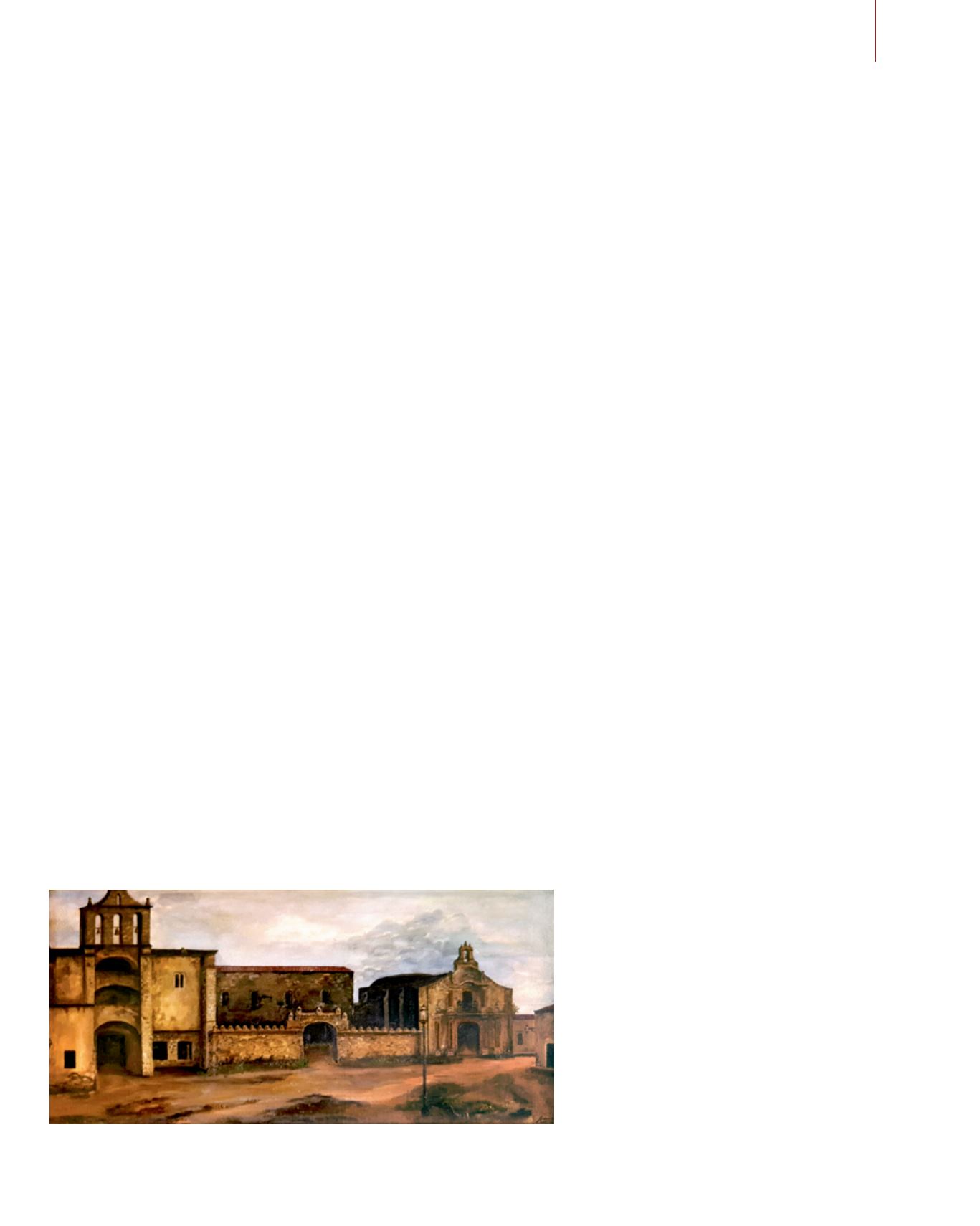
A painting by
Margarita Billini de
Fiallo depicting the
Dominican Convent
and the Chapel of the
Third Order in the
Colonial city of Santo
Domingo.
© Alberto Emilio
Fiallo Billini