


 327 / 540

THE ITALIAN LEGACY IN THE DOMINICAN REPUBLIC
326
and orchestra direction. I heard Verdi, Puccini, Mozart, Rossini, Donizetti, Wagner—in short, all the compos-
ers whose operas were performed at the time (as they are today).
I would often take excursions around Rome with friends: to Ostia, which served as the main beach for the
city; to Cerveteri, the Etruscan necropolis; to Viterbo, with its conglomeration of typical nineteenth-century
houses, and many other places.
All the same, I never neglected my studies. At the college, I would meet with the professors in the six sub-
jects that were required of me, as part of the revalidation I was undergoing for my career as an architect and
engineer in Santo Domingo. I passed them one by one until only architectural composition remained. This
subject was taught by a professor named Silverio Muratori, who evaluated the work I presented to him by
pointing out aspects that needed improvement. Ultimately, I had to make some huge panels with building’s
plans and elevation which I had designed, drafting everything brick by brick—it was a huge job. But I learned a
lot from him, so much so that when I became a university professor in my own country, I applied his teaching
methods, pointing out to my students all the problems in their respective projects.
All of these and other experiences influenced my literary training, which in turn greatly contributed to
expanding my knowledge and imagination in general.
Opening page:
Detail of the San
Lorenzo Cathedral’s
façade in Genoa.
© Andrea Vierucci
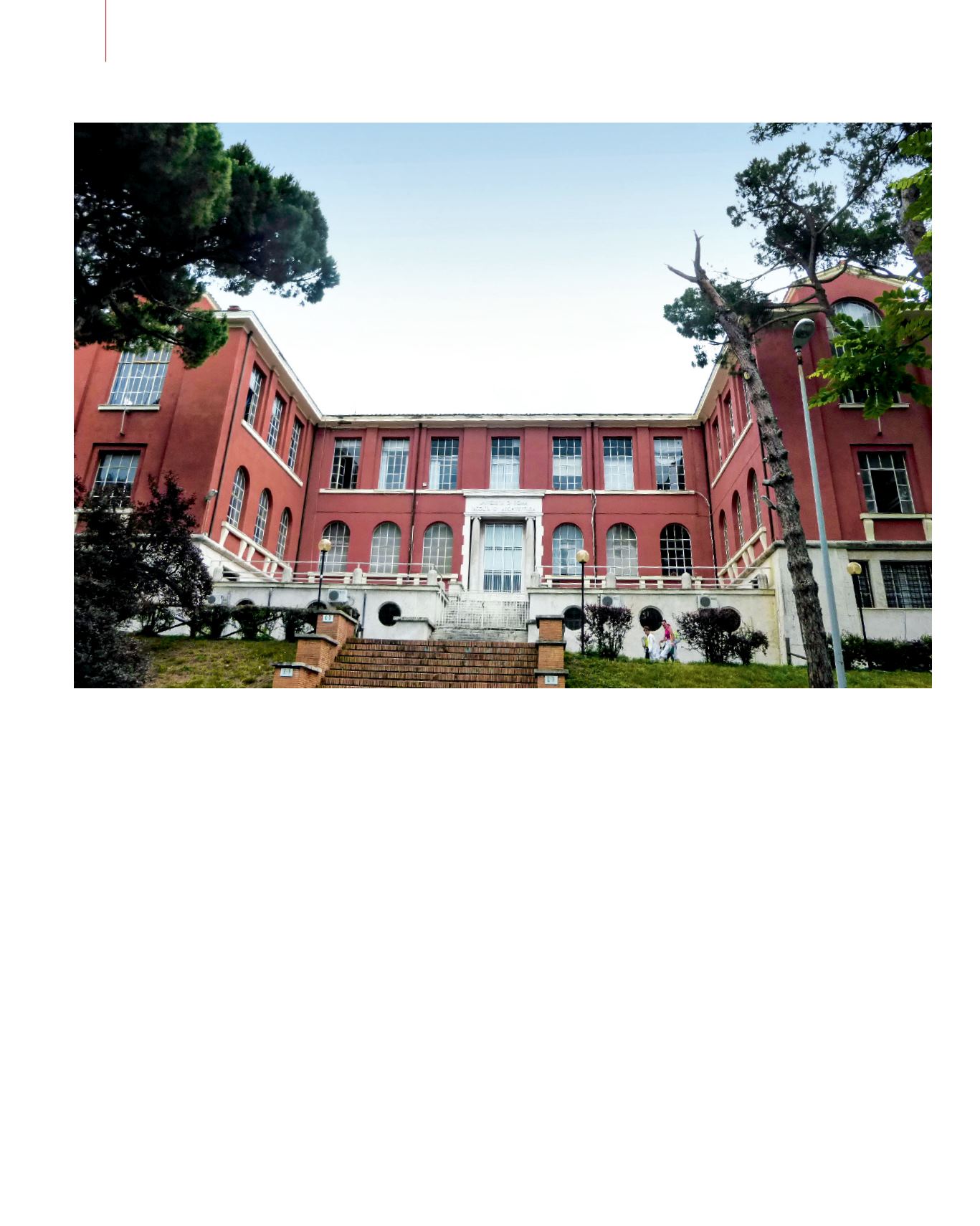
Valle Giulia, building
that houses the School
of Architecture of the
University La Sapienza,
Rome.
© Lalupa / CC BY-SA