


 75 / 540

THE ITALIAN LEGACY IN THE DOMINICAN REPUBLIC
74
At first, the wave of emigration flowed toward neigh-
boring countries (France, Switzerland, Tunisia); in the
last twenty years of the nineteenth century, it was direct-
ed at America. In the period from 1875 to 1925, approxi-
mately ten million people left Italy, of whom almost half
returned.
9
Between 1876 and 1880, emigrants numbered
fewer than 50,000; between 1881 and 1890 the number
approached 100,000, while for the period from 1891 to
1900, emigrants totaled 150,000.
10
As José Del Castillo indicates, the Dominican Repub-
lic was not “an important point of reference for the great
international migratory movements coming from the old
continent,” because “other poles of attraction attracted
the great flows of European settlers.”
11
In the case of Ital-
ian migration, the preferred destinations were the United
States, Argentina, Uruguay, and Brazil.
12
Most of the Italians who settled here came from the southern part of Italy,
13
specifically from towns near
the key port of Naples. Another less numerically significant group arrived from various places in northern
Italy, and was made up of people with different educational levels and already developed business skills. Why
would this be the case? Simply because the South was most affected by the collapse of the agricultural sec-
tor, which forced the unemployed rural population to embark by tens and hundreds of thousands. Further-
more, southern Italy was—and still is—very different in terms of economic wealth, when compared with the
north-central regions. It is the least favored region in terms of natural resources and the one where the imbal-
ance in the distribution of urban centers is most noticeable.
14
These difficulties have been accentuated by the
physical environment: the Apennines, the geological backbone of the long and narrow peninsula, dominate
the morphology of the terrain, with cities having developed in the numerous valleys and plains alternating
between the mountainous slopes.
15
Nicolás Pugliese Zouain notes that the Italians left “when they had completed their compulsory military
service; normally at the beginning of the year, after the September harvest and after the harvesting of the
olives (in November and December), once the oil was stored for family consumption over the course of the
year.” And they set off,
[…] in cargo ships that plied a route along the Tyrrhenian Sea to the port of Naples, where they board-
ed the ‘steamer’ that would take them to Barcelona. The most fortunate, if they arrived on time, em-
barked on the Piróscafo, an ocean liner or ‘bastimento’ (as it was called in Italy) that sailed directly to
America, which would take about a month and a half. Those who failed to align their schedules with
the departure of the ocean liner had to wait for the next one to arrive, which further aggravated their
already precarious economic situations.
With regard to their luggage, of either a material or sentimental nature, he notes:
Since they wore the cashmere suit they used on Sundays and holidays, in their minds they had the firm
intention of abandoning the state of poverty that they left behind with their family, their young wives
and their children. In their hearts, they carried an immense burden of pain, and around their necks,
hung the blessed rosary of the “mamma”; in rough hands, the cardboard suitcase tied with rope and
inside, the photos of relatives, one clean change of clothes, and some food to be consumed during the
trip. The money they had borrowed in town was in their suit pockets, next to their passports.
16
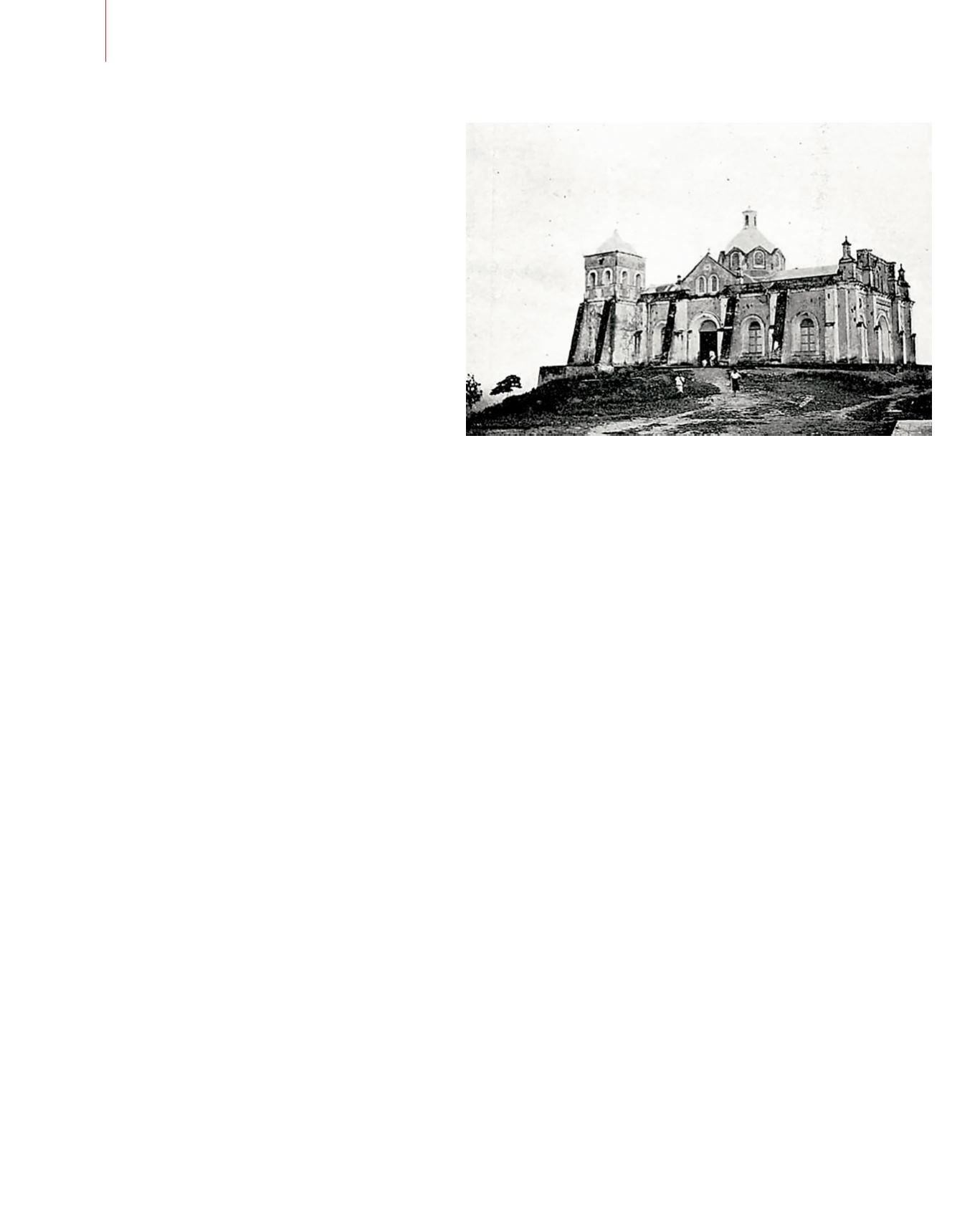
Church of Nuestra
Señora de las
Mercedes in Santo
Cerro, La Vega, where
Father Francisco
Fantino Falco carried
out his pastoral work.
© Edwin Espinal