


 432 / 540

431
THE ITALIAN CONTRIBUTION TO MINING DEVELOPMENT IN THE DOMINICAN REPUBLIC
A. Loma Peguera, in the city of Bonao, aid-
ed by resident Celestino. In this location,
open-pit trenches were constructed to study
and quantify the nickel ore in the area. They
simultaneously studied and quantified the
potential for iron ore in Loma de Caribe.
Canadian mining company Falconbrige was
subsequently established as a result of these
studies. They began operations in the two
areas studied, built a small blast furnace,
and created the first iron-nickel alloy in the
world. The positive economic outcome for
the country is clear.
B. The minerals in the area of Pueblo Viejo,
in the Sánchez Ramírez province, near Co-
tuí, were also studied and quantified. Eight
tunnels were created, totaling 750 linear meters. A study was conducted using six rotating probes in
boreholes, along sections divided into 250 linear meters, for a total of 3877 linear meters of drilling;
plus, an additional geophysical study conducted by magnetic resonance sounding (MRS) was under-
taken. The minerals found were gold, silver, zinc, and pyrite in an upper layer of oxides and a lower
layer of sulfides. An operating license was ultimately granted to the New York and Honduras Rosario
Mining Company, which was only interested in the gold and silver from the upper oxide layer. This
was easiest to extract and carried a lower investment cost. After retrieving the surface minerals, the
mine was abandoned.
The Barrick Gold Corporation is currently extracting the sulfide ore. The positive economic outcome
for the country is clear. Data reported from the first half of 2019 confirm this statement: 24,569.87 kilo-
grams of gold was produced for an export value of US$690.45 million. Silver exported during the same
period totaled US$29.21 million. Over the course of the operating period, Barrick Gold has contributed
US$1,600 million in taxes to the Dominican government.
C. In the Sánchez Ramírez province, Loma La Mina was also studied for the copper ore that is cur-
rently being mined there. In La Laguna, Cacaos, Hatillo, and Loma Caballero, iron ore was examined.
D. In other areas: the sands of Monte Cristi were tested for ferruginous material. In Samaná, marble
was examined, which prompted the establishment of Marmolera Dominicana C. x A., a marble com-
pany in Santo Domingo. In that same area, coal outcrops were also studied. In the Miches area, the
Cuarón River was explored for alluvial gold. The Monción and Jicomé areas were surveyed for the
presence of gold. The San Cristóbal area and the Mata Grande area in the central mountain range were
analyzed for copper ore. The Barahona area was explored for salt, gypsum, and alabaster deposits, and
Canoa was explored for onyx. Silica deposits were found in the Villa Altagracia area, which inspired
the construction of a glass factory in San Cristóbal. The San Juan de la Maguana and Monte Plata areas
were examined for gold-bearing quartz.
E. A first geological map of the Dominican Republic was also developed. This work was personally
supervised by Dr. Renato Zoppis.
Due to the importance of developing mining operations in the Dominican Republic, the Mining Service—
which was established by Italians as the first official mining office in the country—became the General Direc-
torate of Mining in the 1960s and ultimately the Ministry of Mines and Energy.
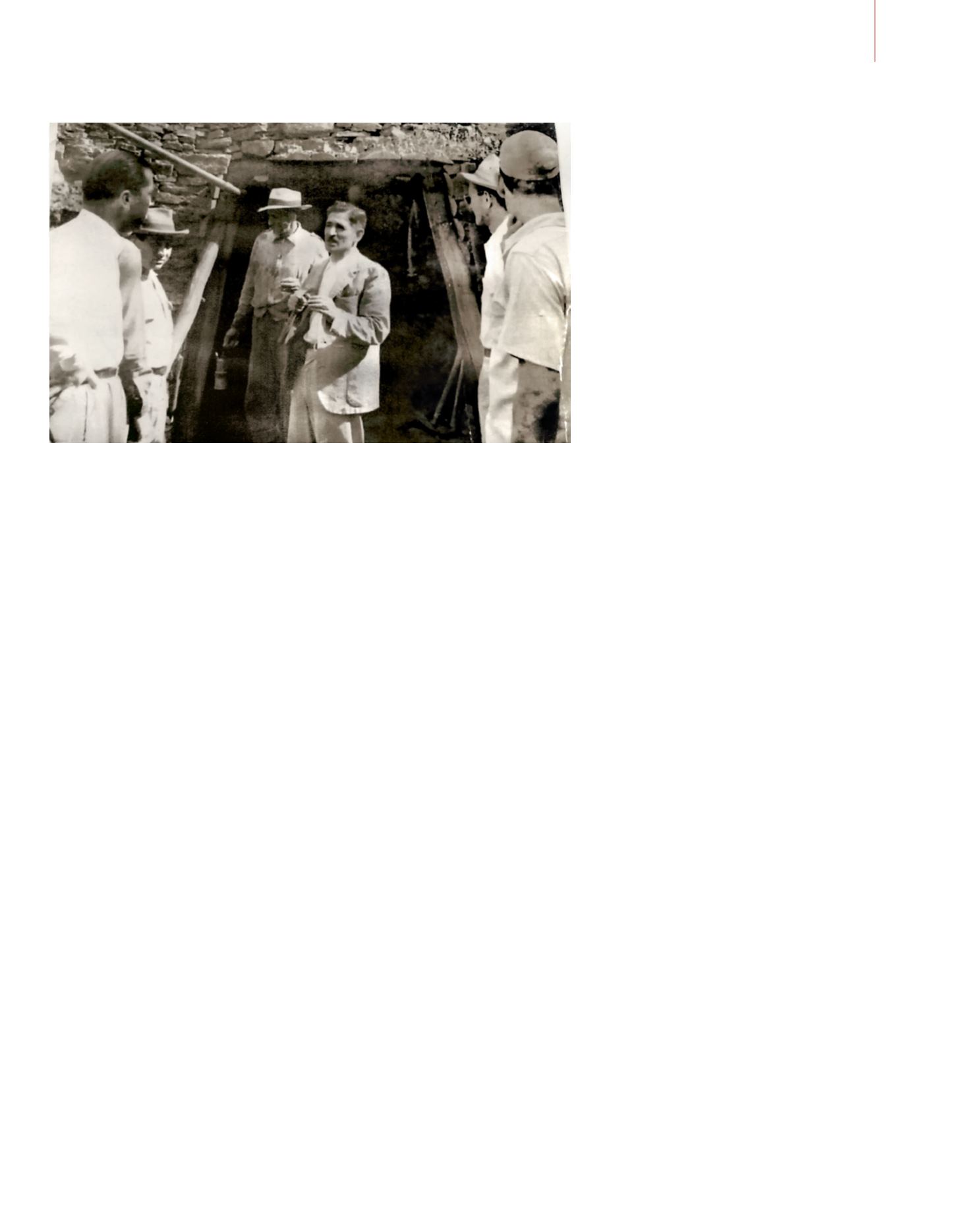
Manuel de Moya
Alonso, Minister
of Industry and
Commerce; Foreman
Sánchez; Terenzio
Seravalle; Dr. Renato
Zoppis; Giuseppe
Borrione; and Luigi
Reboa, land survey
technician, in front of
Tunnel No. 6. (1952).
© Renzo Seravalle