


 437 / 540

THE ITALIAN LEGACY IN THE DOMINICAN REPUBLIC
436
1. Coordinated marketing campaigns.
2. Establishing aviation treaties with new countries.
3. Economic stimulus based on the exchange rate between the U.S. dollar and the Dominican peso.
4. The development of facilities in which foreign companies operating on Dominican soil could hold their
conventions.
5. Decisions making it conducive to properly use existing investments by the Dominican government.
6. Expanded access to INFRATUR resources, in order to increase the number of active projects and prior-
itized zones. In other words, an inclusion of the country’s eastern region in current plans for develop-
ment.
7. Modifications to existing legislation that governs the purchase of real estate by foreign nationals, incen-
tivizing them to become temporary residents.
8. The development of campaigns to attract Caribbean cruise ships to Dominican ports, bringing with
them the 500,000 tourists that visited Puerto Rico and the Bahamas every year.
9. Encouragement of expatriate Dominicans to visit more often, as they are an important source of foreign
capital.
5
Despite the persistent chorus of voices that cried out for the region’s inclusion in the government’s plans,
the East remained in oblivion. It was as though it did not figure into the government’s priorities, with several
proposals going unconsidered by the PRD government. Entrepreneurs from the region eventually came togeth-
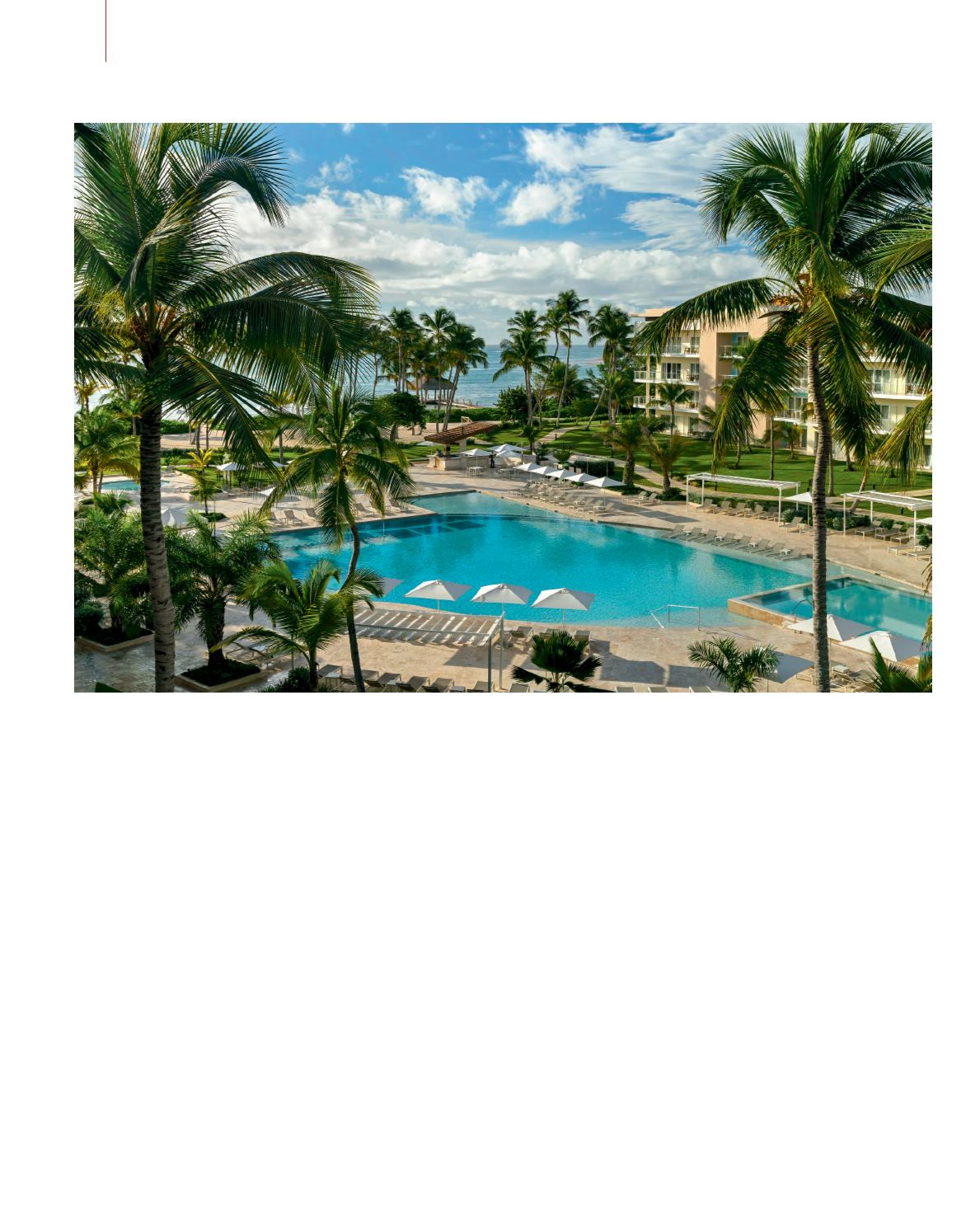
View of the pool
of the Hotel Westin
Punta Cana.
© Grupo Puntacana,
All rights reserved