


 113 / 540

THE ITALIAN LEGACY IN THE DOMINICAN REPUBLIC
112
ghout the long workday, they suddenly exhaled their souls, or they were murdered by the thrust of a sword
at the hands of the leaders of those miserable people” (
Itin.
XVI 19). “And I add, in God’s immortal name—in
fact, since I was a child, I have abhorred the rumors many of our Spanish men, who have nothing in common
with nobility of the mind, when they wanted to test whether the blade of the swords was sharp or dull, would
cut a leg or arm or the naked bodies of those innocent men!” (
Itin.
XVI 24).
Rodrigo de Figueroa, a judge sent to Santo Domingo by the Council of the Indies on August 19, 1519,
8
was first tasked with examining the behavior of Alfonso de Zuazo, his predecessor to the governorship of
Hispaniola,
9
and quickly took office. Figueroa’s administration was very predatory. He was associated with
numerous business initiatives that involved the extreme exploitation of slaves: the pearl trade fromVenezuela,
along with Mayor Antonio Flores, Juan de Córdoba, and Juan de Herrera de Huelva; the new Buenaventura
mines in Hispaniola; the Azua sugar industry, along with Gutiérrez de Aguilón; and the plantations in the nor-
thern part of the island, along with Juan de León. Upon the arrival of the new viceroy Diego Colón in 1520,
Figueroa was prosecuted by Judge Cristóbal Lebrón
10
and convicted of many abuses. He then appealed to the
Council of the Indies and returned to Seville. In 1525, he received a preliminary sentence as a precursor to a
pecuniary sentence and an exclusion from public services.
On September 17, 1519, when Alessandro Geraldini landed in Santo Domingo, Rodrigo de Figueroa was
the Spanish political authority. Their colossal clash is fully detailed in letter ep. 25, addressed to Cardinal
Adriano.
11
It was an utter condemnation of the Spanish misconduct on the island and specifically of Figueroa
for “not pursuing the public good as ancient Roman governors had done, but rather stealing from everyone,
taking all of their assets, [and] even looting the towns on the island” and that “those very unfortunate terri-
tories [were] completely devastated, and that he [did] not seek equality, but rather profit” (ep. 25.1–2). Diego
Columbus himself, along with Alonso de Zuazo, was also a victim of the tyranny and slander. “Figueroa, an
obviously cruel and heartless man, went above and beyond. Upon hearing that, from their public pulpits in
the region, the Franciscans had denounced his family’s well-known income—which they had stolen from the
island and that Figueroa himself reaped the benefits—he considered killing some of them, hitting some others
with the lashes that are given to the Black men, and exiling others” (ep. 25.7).
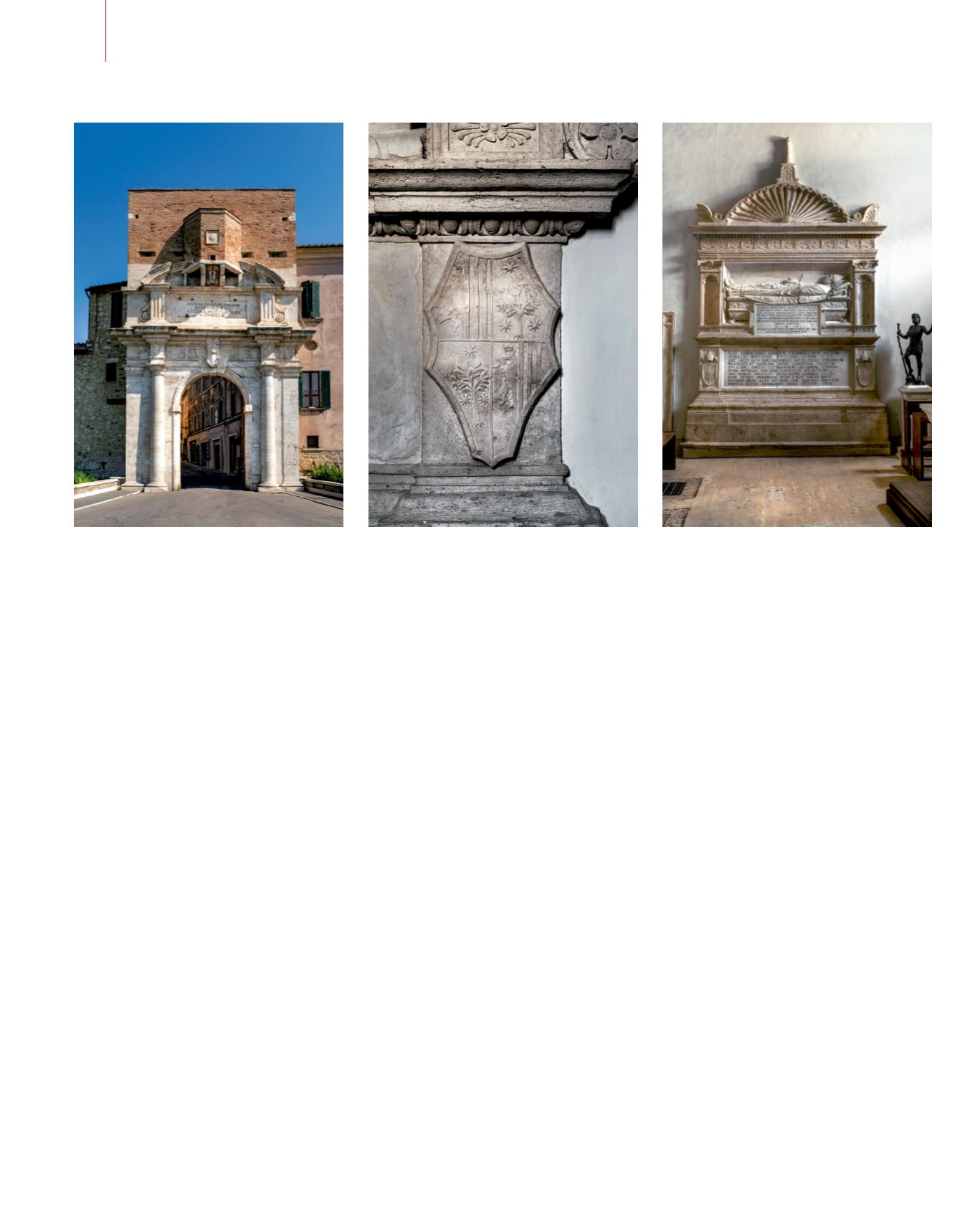
The Roman Gate
(formerly Busolina
Gate) in Amelia.
© Andrea Vierucci
The coat of arms of
Geraldini inside the
Chapel of St. Anthony
of St. Francis Church in
Amelia.
© Andrea Vierucci
Tomb of Angelo
Geraldini inside the
Chapel of St. Anthony
of St. Francis Church in
Amelia.
© Andrea Vierucci