


 309 / 540

THE ITALIAN LEGACY IN THE DOMINICAN REPUBLIC
308
The importance of Altos de Chavón as a location for
Hollywood films, such as Francis Ford Coppola’s
Apoc-
alypse Now
(1979), is surely due to the stunning visual
impact of the Chavón River set amid profuse tropical
rainforest vegetation. Coppola’s film received six Oscar
nominations, ultimately winning three awards, in addi-
tion to three other Golden Globes awards, three Bafta
awards, and one at the Cannes Film Festival. Thus, this
inspiring Dominican landscape has become the back-
drop within the global arena for the “seventh art.”
The influence of Italian culture in Altos de Chavón
is manifested in values that transcend the physical
details of design or the stylistic elements of decor,
emanating instead from the atmosphere of harmony
created fortuitously from the paradox of a replicated
sixteenth-century Mediterranean village nestled in the
tropical landscape of the Caribbean, thereby creating a singularly cultural milieu in the region.
With the construction of Altos de Chavón, three fundamental elements of the Dominican-Italian relation-
ship became evident:
1. Cultural wealth was multiplied by uniting Italian craftsmanship in time-honored artisanal trades with the
privileged experience that is developed when great artists and pioneers in the performing arts work along-
side Dominican artisans who elevate their own know-how to the highest standards of balance and excel-
lence in design.
2. The architectural style developed in Altos de Chavón reflects an authentic Mediterranean character, mixed
with the tropical ambience that proliferates in the Caribbean. Due to the design of its elements, the materi-
als used, and land use aimed at showcasing and enhancing local talent, gastronomy, and culture, a synergy
is created through the fusion of fine living and the fine arts.
3. The creation of an artistic community has made Altos de Chavón a global benchmark in terms of educa-
tion, dissemination, and the creation of a common culture oriented toward creativity and design.
Finally, Roberto Coppa’s architectural legacy at Altos de Chavón should not be understood as a unilateral
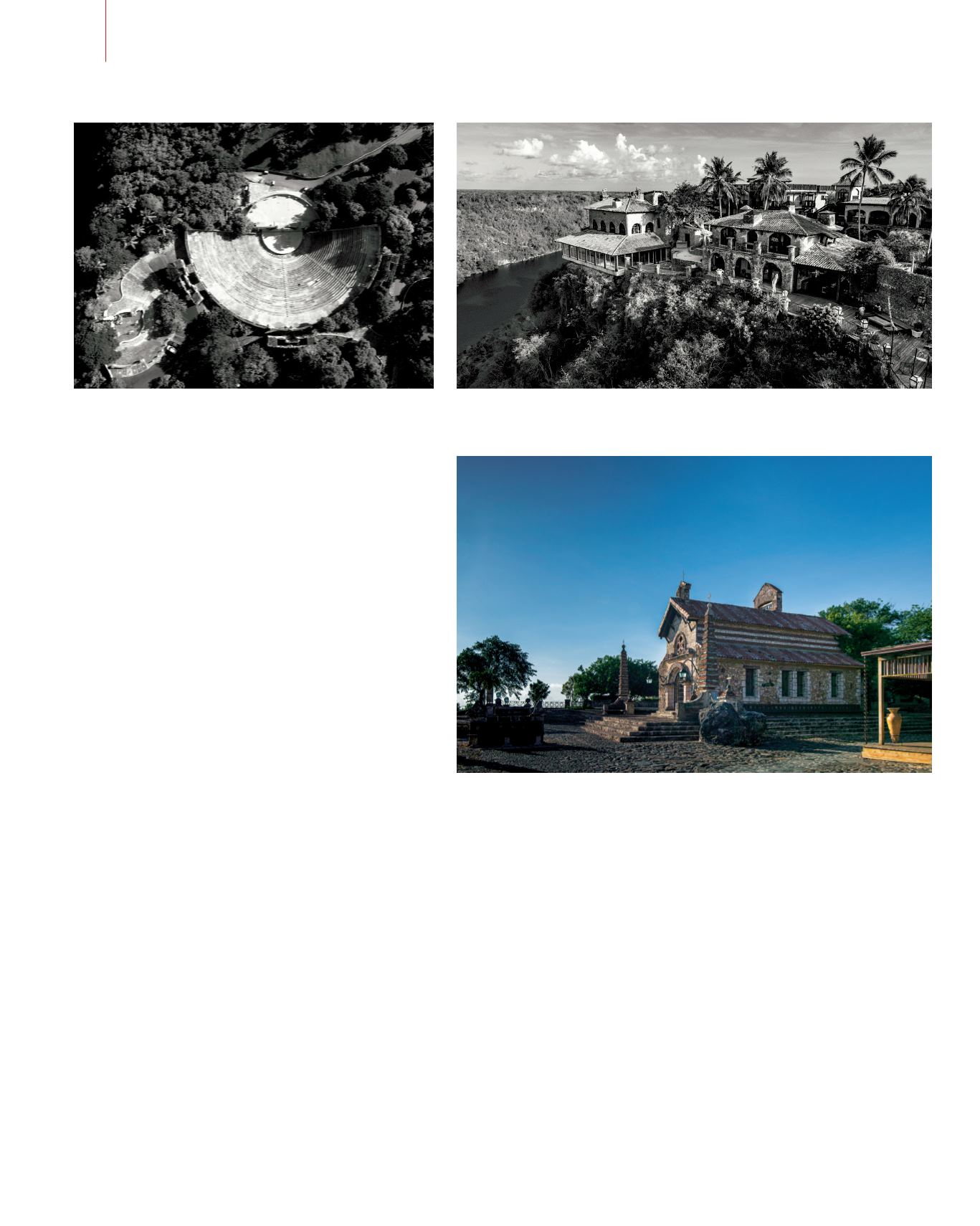
Historical views of
Altos de Chavon.
© Alba Mizoocky Mota
López
The Church of San
Estanislao, Altos de
Chavón.
© Thiago Da Cuhna