



 313 / 540

THE ITALIAN LEGACY IN THE DOMINICAN REPUBLIC
312
practical solution; however, Fini proposed to aim higher by suggesting a fully functional marina. The Roman
architect pursued his vision with a passion by delivering three other proposals, between 1994 and 1997. These
blueprints served as the subject of countless meetings and endless modifications, until the June 1997 version,
which was finally approved in November of the same year, as a conceptual proposal that was later polished
for market presentation. Fini then began working on a schematic version of the project: a simple presentation
that gave the general idea of the marina, focusing on defining the types of apartments and a general outline
of the docks with moorings, which would be proposed to a select audience of owners and visitors to Casa de
Campo. The presentation of the preliminary project took place several months later at La Romana Country
Club; it was cheerfully embraced by all stakeholders, convincing all of the validity of the operation.
From that moment onward during the following two years, the real design work for “La Marina” had
commenced and was carefully studied in every minute detail, from the manhole covers to the texture and
spectrum of the roof tiles—and everything in between. The project was positioned on the west side of the
Chavón river, in a swampy and discontinuous area nearly at sea level, which the locals had been using as a
sand pit for construction. The total area of intervention was approximately 220,000 square meters on the land
side, and approximately 110,000 square meters on the sea side, for a total of 330,000 square meters. In July
1998, Fini and his newly arrived daughter Nicola, a recently graduated architect who joined the design team,
officially began construction on the entire port, including the breakwater and concrete piers, as well as on the
homes along the plaza and on Calle Barlovento. They then proceeded to the houses along the Ensenada with
terraces and private docks on the water and the gardens and parking lots and the shopping center, the yacht
club, and any other visible element of the architectural landscape of the Casa de Campo Marina that we enjoy
with renewed pleasure upon each visit. However, before the actual construction work began, it was necessary
to prepare the area, a very arduous and complicated process.
Any visitor arriving today at the Marina for dinner or for boarding a vessel might not be able to visualize
how much work was required to complete this project. Preparation of the intervention area began with back-
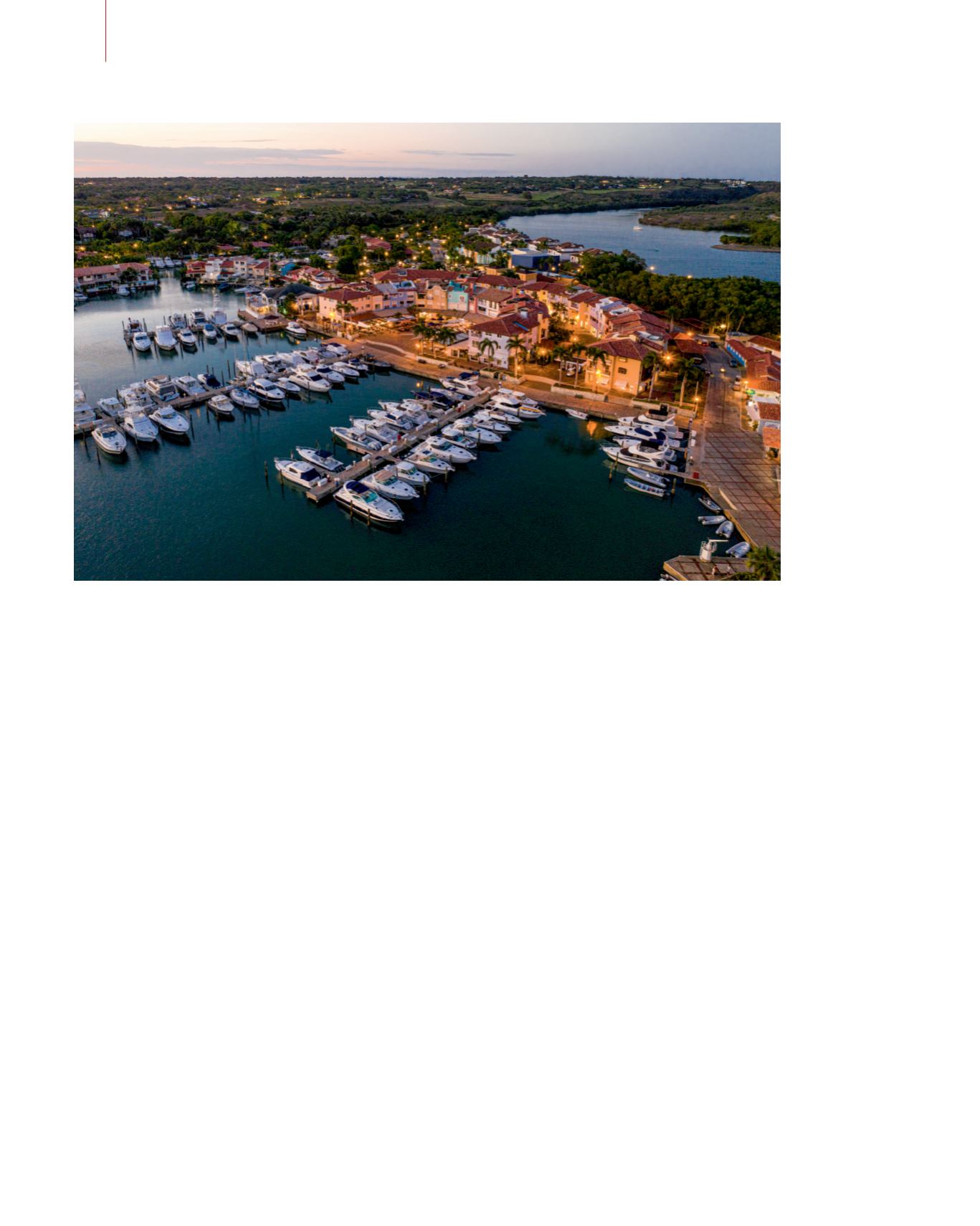
Panoramic view of
the entire marina,
including “Plaza
Portofino” and the
“Ensanada”; at the
center, the “Paseo
del Mar.”
© Thiago da Cunha