


 307 / 540

THE ITALIAN LEGACY IN THE DOMINICAN REPUBLIC
306
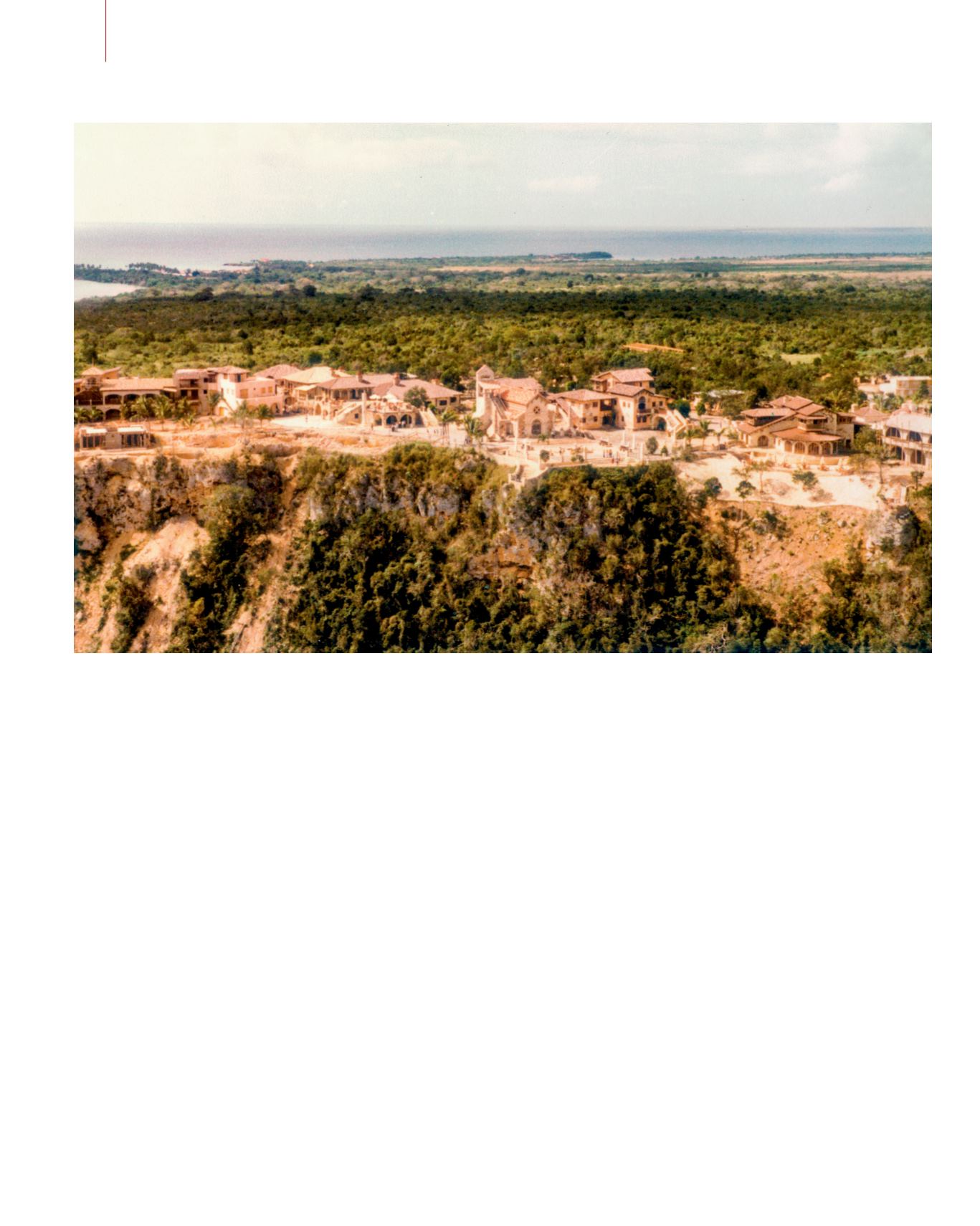
The complex is situated on a high plateau approximately 100 meters from the Chavón River; it features wind-
ing cobbled streets and a central square, where the small Catholic church San Estanislao is located. This beautiful,
two-toned church of stone and brick features a neoclassical-inspired entrance, a small rose window, and a double
bell tower extending from a vertical wall. The tower can be accessed by an external stone staircase.
The church of San Estanislao also contains a reliquary with some of the ashes of the patron saint of Poland,
the country of origin of Pope John Paul II, who donated them to the Dominican archdiocese on the inaugura-
tion of the church in 1979.
A few meters away is the Altos de Chavón Regional Archaeological Museum, inaugurated in 1981, which
features a pre-Columbian exhibition hall documenting the invaluable heritage of the indigenous cultures of
the island. The museum’s holdings include more than 3,000 objects from different areas of the Caribbean and
Central America, which were amassed over a period of 40 years by the collector Samuel Pión.
The City of Artists has become a multidisciplinary point of reference for the field of design in its various
branches, such as graphic design, illustration, fashion design, and the visual arts, most notably through the Es-
cuela de Diseño de Altos de Chavón (Altos de Chavón School of Design), founded in 1983 and affiliated with
the Parsons School of Design in New York.
The town also houses countless arts and crafts workshops, focusing on pottery, basketry, textiles, and
screen printing, as well as boutiques, restaurants, and galleries that display works of art by famous Dominican
artists, making the village a major destination for locals and foreigners and creating a vibrant environment of
cultural exchange set among cobble-stone streets with a breathtaking view of the Chavón River.
Opening page:
Aerial view of the
Altos de Chavón
Amphitheater.
© Thiago Da Cuhna
The Altos de Chavon
complex in its first
phase of construction.
© Arch. Adolfo Despradel