


 296 / 540

295
connect for various reasons with Italian products and works of art. He is one of the architects who maintained
strong artistic, professional, and commercial links with Italy.
Gianni Cavagliano Strozzi (November 1, 1939).
Università degli Studi di Roma, 1960 - 1962. He
began his studies at USD, from which he graduated, returning after two years in Rome. The reason for
his trip to Italy was to avoid political difficulties with the Trujillo regime. He devoted his career mainly
to institutional and domestic interiors. He collaborated with the architects Edgardo Vega Malagón and
Manuel Baquero in various noteworthy projects. He is the son of Mario Cavagliano, who, with his wife
Dirce Strozzi de Cavagliano, served as an official at the Italian Embassy to the Dominican Republic for
more than 50 years.
César Iván Feris Iglesias (April 30, 1940).
Università degli Studi di Roma, 1967 - 1968. Feris Iglesias at-
tended La Sapienza, which validated the subjects he had taken at UASD, and was part of the first graduating
class in architecture in the country. In Rome, he completed his thesis on a multifamily housing unit, just as he
had done with his outstanding qualifications in Santo Domingo. Upon his return to the Dominican Republic,
he served as professor of the history of architecture at UNPHU for more than 30 years, providing countless
students with an excellent education in the humanities. He completed additional studies in Yugoslavia and
Ravenna. He has made important contributions in local architectural culture. He served as director of the
Museum of Casas Reales and chancellor of the Catholic University of Santo Domingo.
Leopoldo Franco
(November 30, 1940).
Università degli Studi di Roma, 1961 - 1968. He completed the
full curriculum at La Sapienza. During his stay in Rome, he formed a group of fellow students and later pro-
fessionals that collaborated in the drawings of his university professors’ projects. This group later became a
professional society. An astute writer, he was the chief architect of the FHA at the National Housing Bank for
many years. He is the draftsman behind many important works of private and institutional architecture, such
as the buildings for Agencia Bella, Seguros Pepín, and Avelino Abreu.
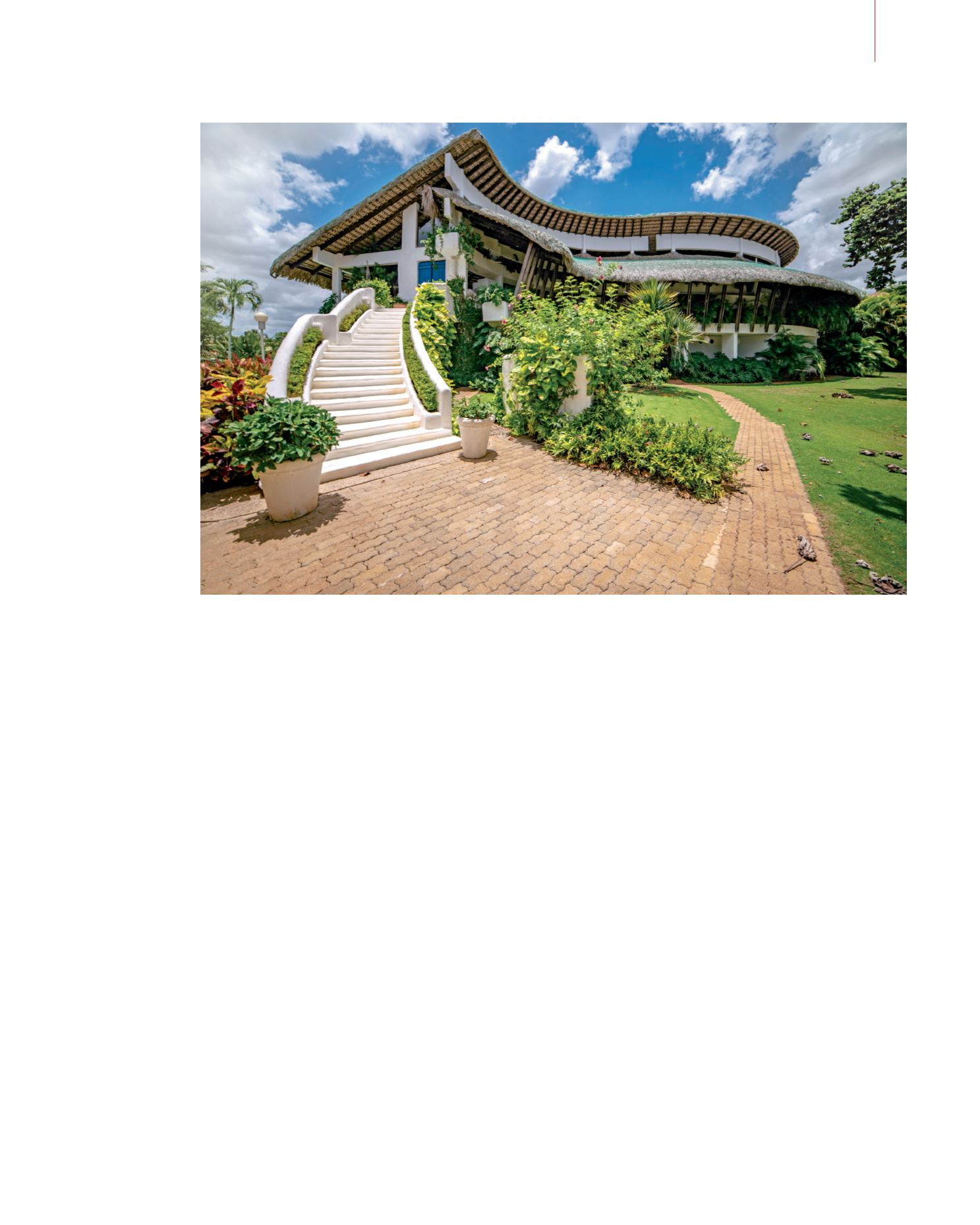
Barranca 1 Vacation
Residence, in Casa de
Campo, c. 1984, work
by the architect José
Horacio Marranzini.
© Archive Gustavo Luis
Moré
THE ITALIAN TRAINING OF MODERN DOMINICAN ARCHITECTS, 1950 - 2019