


 158 / 540

157
FRANCISCO GREGORIO BILLINI, PRESIDENT AND AUTHOR
in the country and enjoy the civil liberties of
the day. His longtime friendship with Guill-
ermo, which had not been weakened by pol-
itics, also had an impact.
Given Billini’s stance, Luperón and Heu-
reaux came to an agreement for the first time
in many years. Feeling equally threatened by
their most formidable foe, they planned to
challenge the president. In hindsight, Heu-
reaux was clearly the driving force behind
the sabotage of Billini’s presidency.
The president, aware that he would be
ousted, had no alternative but to resign af-
ter only a little more than eight months in
office. This was obviously an unfavorable
blow to a progression that seemed to be
heading toward democracy. The fallen pres-
ident was not daunted by this. He proudly
announced his decision to the country in a
speech that was delivered before Congress
and published in the
Gaceta Oficial
, issue 563,
of May 19, 1885.
As I ascended to the seat of power that
would determine the fate of the nation,
although I steadily climbed every step,
I doubted my grandeur because I want-
ed to do so much for the good of the
Republic. Today, having achieved very
little given the circumstances, I think this descent raises me up: my vain and ephemeral personality
gives way to the rise of the great and immortal Republic. I want to set an example by spontaneously
resigning from office, retreating into the shadows of my home, without futile aspirations for the
future. You might think I am sinking, but I feel like I am standing on top of the world!
Although Billini avoided directly criticizing Heureaux or any other deceitful opponent, he deemed it nec-
essary to explain his resignation by making it clear that the continuation of his presidency during economic
difficulties could have disrupted the peace, the country’s most precious asset. This was his way of gently fore-
warning of what was to come.
[...] allow me to repeat that I am not conceding power to the vice president of the Republic because of
petty motives or fears of unfounded cowardice. No! I am stepping down because—given the distress-
ing political and economic circumstances, which could change with a new government—peace could
perish in my hands because of my own obstacles.
He then immediately alluded to his refusal to compromise with corrupt practices: “My politics have al-
ways been on the straight and narrow. I have always turned away from the darkness so that I could embrace
the splendors of freedom and be invigorated by them.”
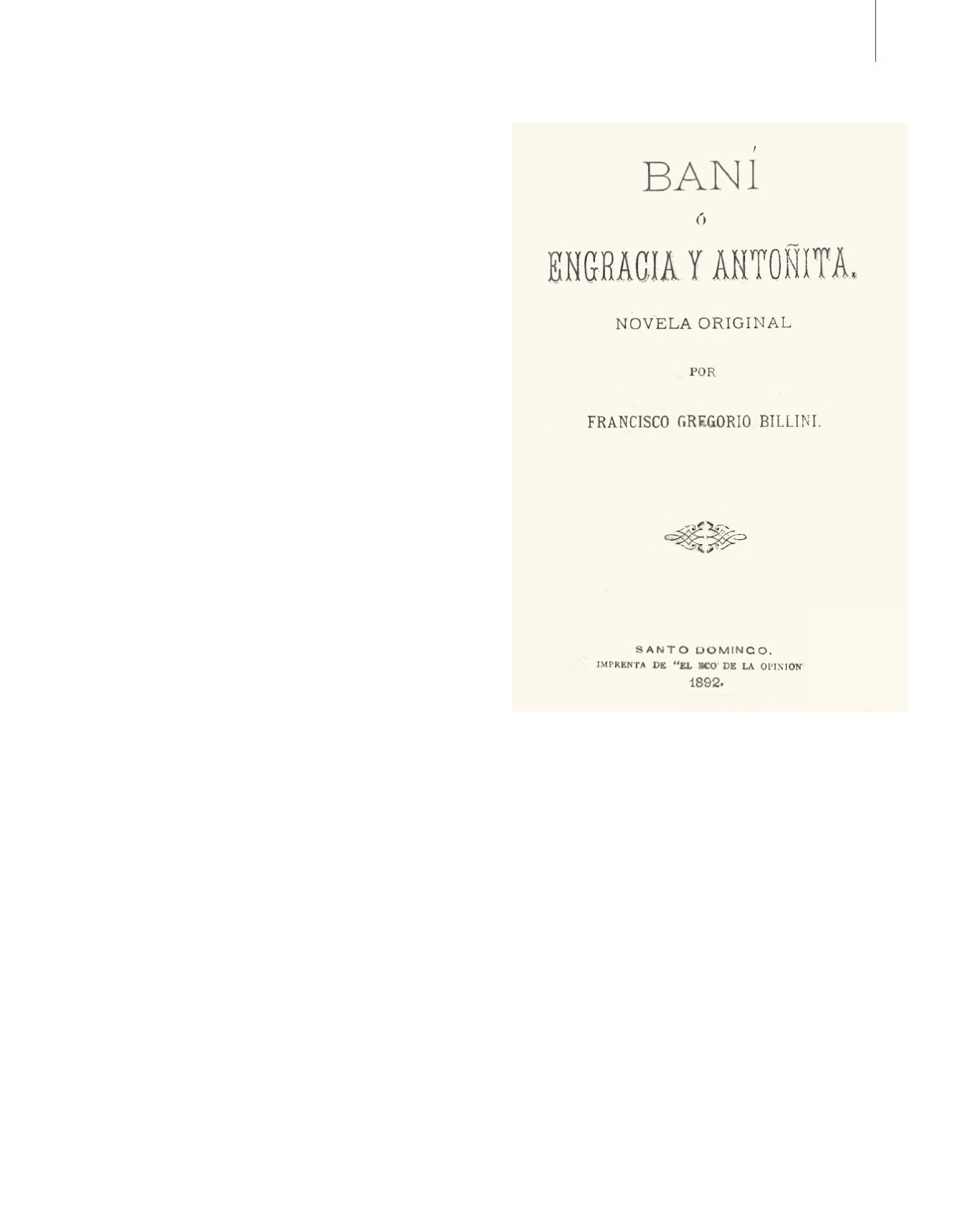
Cover of
Baní o
Engracia y Antoñita
by Francisco
Gregorio Billini.
© Archivo General
de la Nación