


 361 / 540

THE ITALIAN LEGACY IN THE DOMINICAN REPUBLIC
360
At that deplorable time for the country’s musical culture, the providential presence of a descendant of Ital-
ians from the Ravello region, José de Jesús Ravelo (1876), came to fill a significant gap during this long period
of official abandonment in the musical training of Dominicans, thereby vindicating the artistic heritage of his
ancestors. His fervent and altruistic devotion to this noble cause would make him, over the years, a patriarchal
figure in the music of the Dominican Republic.
Ravelo’s interest in music seems to have originally been inspired by conversations with the children of the
Dominican writer Manuel de Jesús Galván, while his only formal studies (in music theory and clarinet) were
under Juan Francisco Pereyra. All of his later training was acquired on his own, making Ravelo one of the most
noteworthy self-taught musicians in our country’s expansive musical culture. The passion of his life centered
on the music of Giuseppe Verdi, and Ravelo came to consider himself a disciple of the great Italian composer.
In 1894, at merely 18 years of age, Ravelo was appointed director of the Banda Pacificador, which he direct-
ed until 1900. When Eugenio María de Hostos introduced choral singing to musical education, Ravelo became
the first teacher of this subject in the country, in addition to serving as music teacher at the Instituto Salomé
Ureña and at the Colegio Santo Tomás.
In 1904, at the initiative of Juan Bautista Alfonseca, the Octet of the Casino de la Juventud was founded,
which, under the direction of José de Jesús Ravelo, would showcase the music of the great Italian composers.
In 1908, he founded the Musical Lyceum, and in 1920 he was appointed director of the Municipal Band. In 1928
he served as president of the First Dominican Congress of Music, and in 1931 he became the artistic director
for the HIX station.
On April 7, 1939, his oratorio
La Muerte de Cristo
(The Death of Christ) was presented for the first time in
the Metropolitan Basilica, sung to four voices by a mixed choir of 60 voices and an orchestra of 40 instrumen-
talists; this work became part of the tradition of Easter, continuing to this day.
On March 23, 1940, Ravelo was inducted by the Dominican Government into the Order of Duarte, Sán-
chez, and Mella in the rank of Officer.
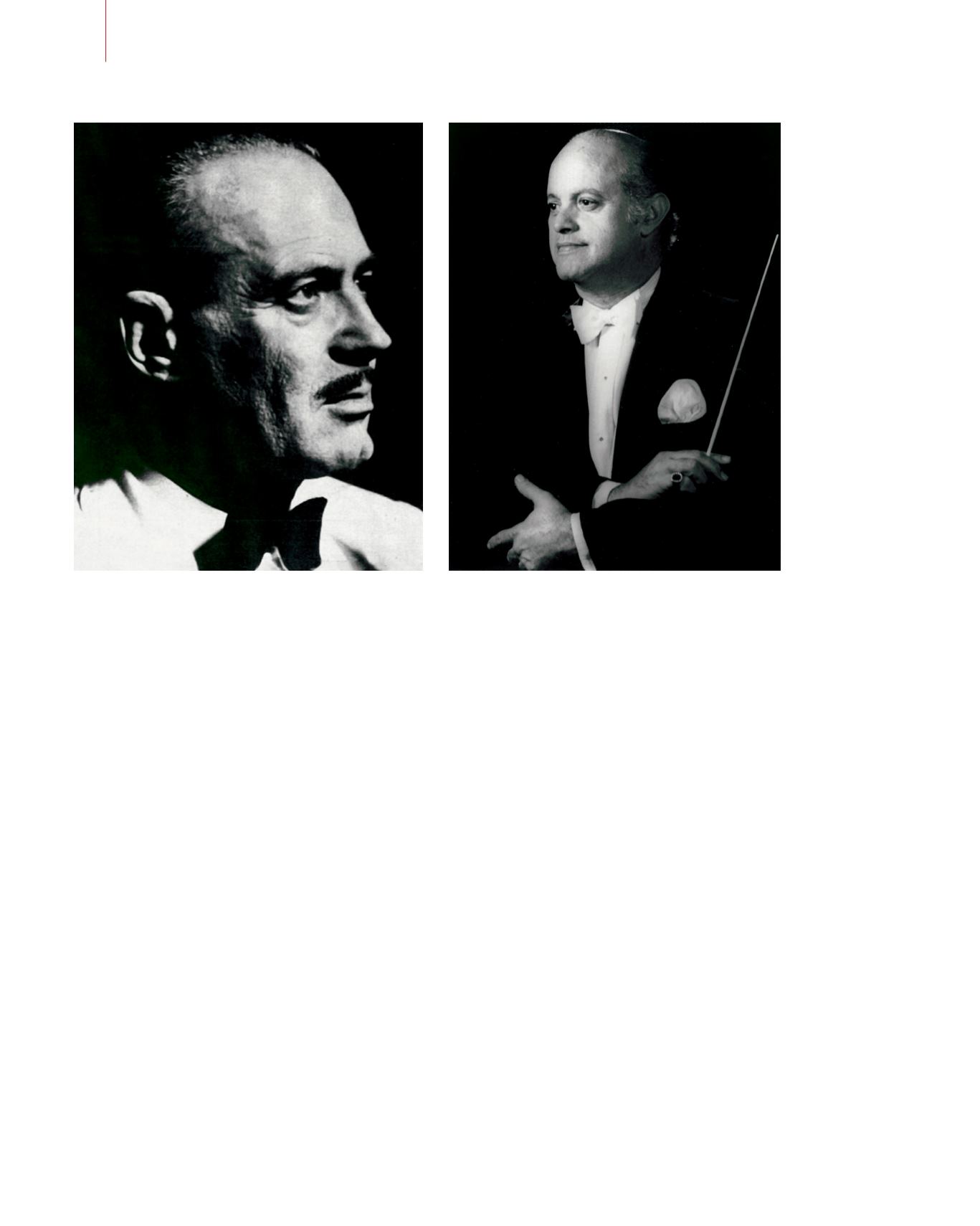
Francesco Montelli.
© Blanca Delgado
Carlos Piantini,
Director of the
National Symphony
Orchestra (1984-
1994).
© Blanca Delgado