


 35 / 540


THE ITALIAN LEGACY IN THE DOMINICAN REPUBLIC
34
Ben delights the palate with a piquant discussion of the Italian influence in cuisine, noting its expression in
the country’s social institutions, such as the iconic “Vesuvius” restaurant, a long-time favorite still remem-
bered with nostalgia by many as a weekend highlight, while also making known Italian gastronomy and
wines through an account of the Bonarelli family’s business activities (“The Flavors of Italy in the Domin-
ican Republic”).
The last two chapters offer the words of two members of the current government. In the penultimate
chapter, “Considerations on the Relationship between the Dominican Republic and Italy,” the Minister of
Commerce, Industry and Micro, Small and Medium Businesses, Ito Bisonó, speaks authoritatively on eco-
nomic relations between Italy and the Dominican Republic, his friendship, and his commitment to building
even stronger relations between the two countries, while recalling his parents’ familial ties with Italy. The last
chapter contains the excerpt of an important speech made by Foreign Affairs Minister Roberto Álvarez at the
Dominican-Italian Chamber of Commerce on September 22, 2020.
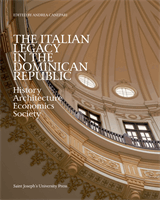
The book is richly illustrated: Italian and Dominican photographers worked together to portray the visual
signs of Italy in the Dominican Republic. An important archival set of pictures was compiled by identifying
early texts and images that testify to the depth of the relationships described in the chapters. It was a pleasure
to speak with such outstanding photographers as the Italian Giovanni Savino, now in New York, who I met
through an introduction by Professor Robin (Lauren) Derby of the University of California at Los Angeles
(UCLA), with whom he has worked on academic publications. Giovanni Savino has spent many years carry-
ing out photographic and documentary research in this country, focusing mainly on Dominican traditions but
also documenting the countryside; I thank him for having donated the photos that appear in this book. The
dialogue between Italy and the Dominican Republic is always built in symbiosis, the two national components
proceeding in parallel: Dominican photographers, including Thiago da Cunha and Ángel Álvarez, bring out
the Italian character of this country in their shots, while, returning to Italy, Andrea Vierucci presents images
of the places of origin of iconic Italians in the Dominican Republic, which are included in an important public
diplomacy project that I had the privilege of promoting.
The celebration of Italian cultural heritage in the Dominican Republic found itself at the center of a mul-
tifaceted public diplomacy project at the end of 2020, inspired by the 200th anniversary of the birth of Juan
Bautista (Giovanni Battista) Cambiaso, citizen of an Italian state and consul of the Republic of Genoa, founder
of the Dominican Navy, first admiral of the Republic, and hero of Dominican independence. The project en-
compassed not only publication of this elegantly illustrated book, which contains 47 essays in three separation
translations to reach Hispanic, Italian, and international readerships. Its iconic stories were then brought to life
through a number of other channels in parallel to its presentation: a professional digital edition, a graphic nov-
el for fifth-grade students distributed to schools in the Dominican Republic, a presentation on digital channels,
and a weekly half-page in the printed edition of the most widely circulated Dominican newspaper,
Diario Libre
.
The graphic novel was created by professional set designers, scriptwriters, and cartoonists with the aim of en-
tering the collective imagination by framing stories fundamental to the Dominican Republic through episodes
and characters that symbolize the historical-cultural relations between Italy and the Dominican Republic.
Another outlet was created through a video, made in Italy by photographer Andrea Vierucci, who taped the
places of origin in Italy of selected historical figures from the book and graphic novel. There is also a real and
virtual photography exhibition that joined the Italian historical figures highlighted in this book with places and
portraits of the same people in the Dominican Republic, their association with Italy having been rediscovered
thanks to the stories written and issues studied by the authors and presented here.
This book has thus become the cornerstone of a broader, more ambitious public diplomacy program
that I hope will take relations between Italy and the Dominican Republic to a new level. I am convinced
that appreciation of the Italian cultural heritage in this country, focusing on the exemplary stories of famous
Italians who have changed the history of the Dominican Republic, is also important as a source of pride for
our community, those of early and of more recent emigration. Both can identify with the significant Italian