


 140 / 540

139
RICARDO PITTINI: ROMAN CATHOLIC ARCHBISHOP OF SANTO DOMINGO
and a $10,000 prize. In February 1937,
Nicholas Murray Butler, President of
Columbia University and chairman of
the U.S. committee appointed by Pres-
ident Franklin D. Roosevelt to raise
funds for the Christopher Columbus
Memorial Lighthouse in the United
States, visited the Dominican Repub-
lic. Trujillo presented Butler with the
Order of Duarte, and Pittini gave But-
ler and his wife a tour of the Basilica
Cathedral of Santa María la Menor,
which included opening the urn that
contained the remains of Columbus
that would be interred in the light-
house once completed. In 1946, the
General Assembly of the United Na-
tions unanimously approved the pro-
ject. After a lengthy speech by Trujillo
during the lighthouse’s groundbreak-
ing ceremonies on April 14, 1948, Pit-
tini blessed the construction site and
future work on the project.
6
The light-
house was completed in time for the
1992 quincentennial celebration of the
European discovery of the Americas.
In the post-World War II period, both Trujillo and Pittini were ardent anti-Communists. On March 26,
1946, in an article in the now defunct Dominican newspaper
La Nación
, Pittini declared that the Roman
Catholic Church in the Dominican Republic was strongly opposed to Communism. The U.S. Department
of State, acknowledging the Church’s opposition to Communism, realized that U.S. support of Trujillo’s
dictatorship was beneficial to the U.S. strategy of containment of Communism. According to George F.
Scherer, the U.S. Chargé in the Dominican Republic, “The present administration by its oppressive meas-
ures may be expected to keep the Dominican Republic free of any significant Communist penetration.
However, the real danger from Communism in the Dominican Republic will materialize when President
Trujillo falls from power. As the whole political life of the country is centered in the Dominican Party and
as that party has no basic program other than the maintenance of Trujillo in power, his fall will probably
bring about that political vacuum which is so favorable to the rapid growth of the Communist Party.”
17
The 1954 Concordat with the Vatican gave Roman Catholicism special treatment as the majority faith
in the Dominican Republic.
18
The Concordat, the first one signed between the Vatican and a Latin Ameri-
can nation during the 20
th
century, provided the Trujillo dictatorship with a high degree of prestige both at
home and abroad. This Concordat, much to the pleasure of Pittini, extended special privileges to the Catho-
lic Church not granted to other religious groups. Privileges included funding for expenses such as adminis-
tration and construction, visa exceptions, and exemptions from customs duties. Significantly, it recognized
and guaranteed the property of the Church and declared that temples and religious buildings belonged to
the Church. Pittini, citing Trujillo’s “resolute protection” of the Church, contended that the Church in the
Dominican Republic had “reached a degree of splendor it had never known before.”
19
One could argue that
1954 was the pinnacle of friendship between the Church and the Trujillo dictatorship.
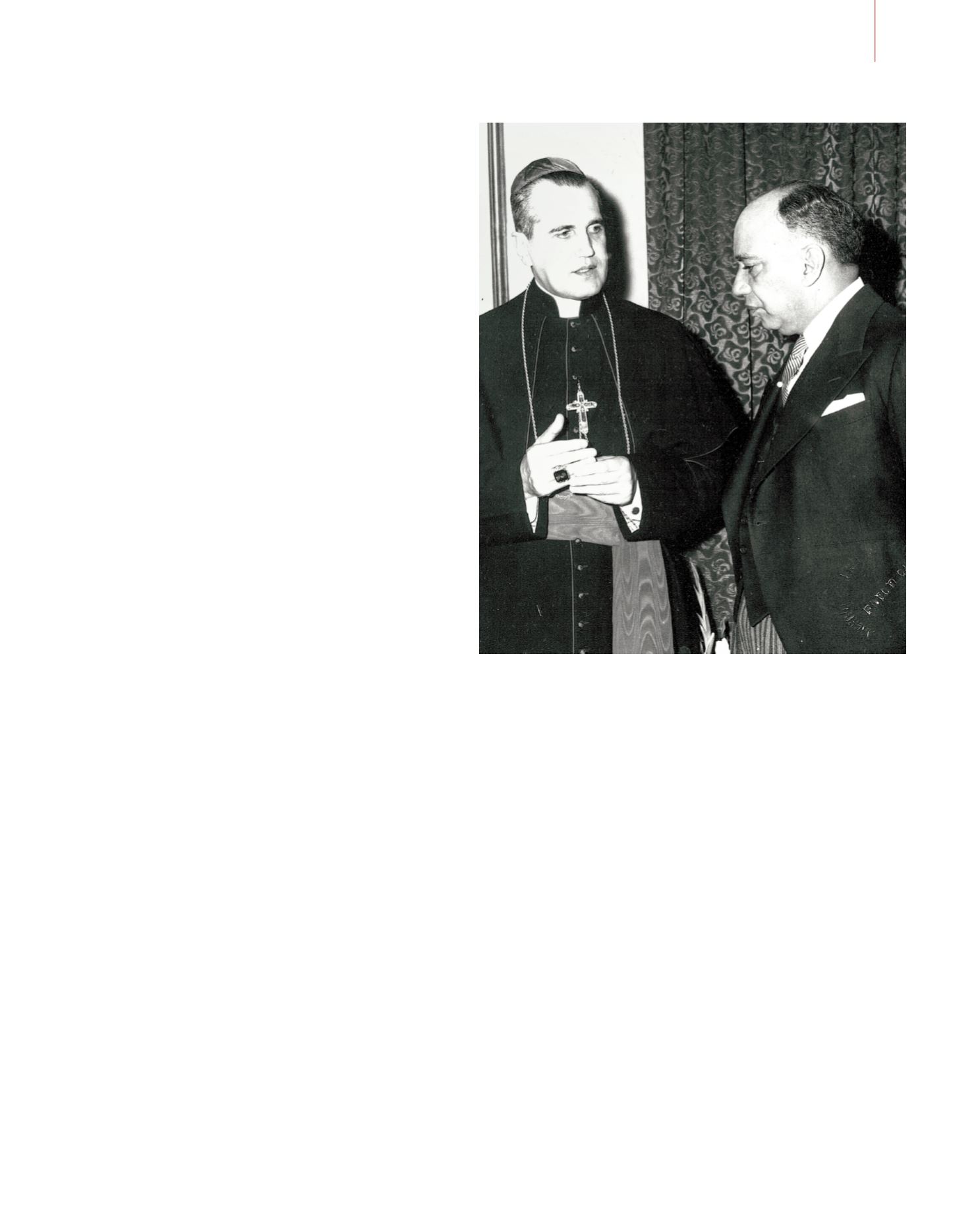
President Héctor
Bienvenido Trujillo
Molina at the
reception offered for
the Apostolic Nuncio
Lino Zanini.
© Archivo General de la
Nación