


 400 / 540

399
THE DOMINICAN-ITALIAN CHAMBER OF COMMERCE
In 2000, he joined the CerArte Proyecto family,
which is aimed at offering solutions for designers and
contractors searching for high quality but well-priced
ceramic and porcelain wall and floor tiling, bathroom
fixtures, and plumbing materials. In 2009, the Cer-
Arte Punta Cana store joined the group. And in 2016,
growth continued with a store in Santiago, which of-
fers high end materials in the northern region of the
country.
In 2019, CETECA S.A. joined the CerArte
Group, Cerramientos Técnicos del Caribe, S.A. lo-
cated in Las Americas Free Zone Park, the company
uses modern state-of-the-art machinery to manu-
facture doors and windows for the hotel and other
tourist industries, as well as exporting and import-
ing raw materials.The CerArte Group is made up
of a Family Council chaired by Angelo Viro, with
Orazio Viro heading operations, Rosangela Viro
overseeing the creative aspect and sales strategies,
and Rosario Mañon de Viro overseeing social in-
vestment projects and warehousing.
The impact that the Pellerano family has had in
various fields of economic, social, and cultural activ-
ity in the Dominican Republic deserves special men-
tion. With the help of Mr. Máximo A. Pellerano, the
family ventured into the world of insurance by creating what would become the most important insurance
company in the country, the Compañía Nacional de Seguros, which later changed its name to Segna.
With a strategic vision, Máximo Pellerano and his son Manuel Arturo Pellerano Peña created the Banco
Nacional de Crédito (Bancrédito), which, a few years after its foundation, acquired the Dominican assets of
Chase Manhattan Bank, in the first merger of a U.S. bank with a Dominican bank.
At the same time, the Pelleranos became interested in production via free trade zones and created the San
Isidro Free Zone, which has become a model of operations in the country, and which has significantly contrib-
uted to the nation’s development by creating more than 4,000 direct jobs and by fostering an export culture
in the country.
In another area, the Pellerano family’s Grupo Financiero Nacional entered the telecommunications sector
through the creation of the Tricom company, which in 1994 broke up the telecommunications monopoly in
the Dominican Republic, thereby guaranteeing the further development of this important economic sector.
Tricom was also the first Dominican company to be listed on the New York Stock Exchange.
The Pellerano media outlets—
Rumbo
,
Mujer Única,
and
Diario Libre—
have been duly recognized for their
successes and their breakthroughs in the Dominican press.
Lately, the Pellerano family has ventured into the meat products industry under the Nutriciosa brand,
whose products are gaining broad acceptance from consumers.
As can be seen in this thumbnail overview of the Pellerano family enterprises, their contribution has not
been limited merely to economic development but also to culture, journalism, and a series of high-impact
social responsibility activities in Dominican society.
The story of Massimiliano Wax is also quite unique. This member of the Dominican-Italian Chamber of
Commerce board of directors was born in Genoa and raised between São Paulo and Belém in Brazil, only to
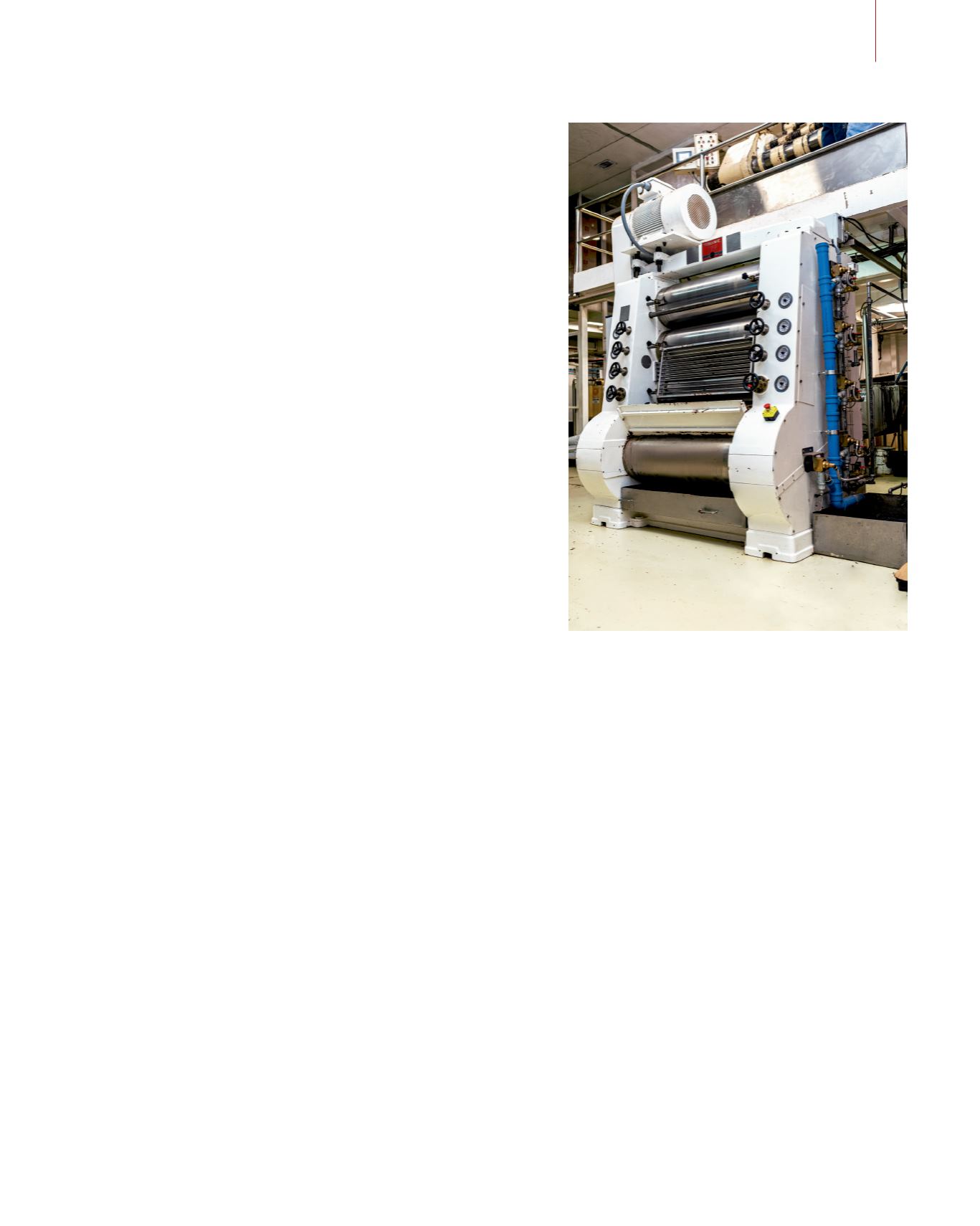
High precision Italian
mechanics, displayed
here by a Carle &
Montanari cylindrical
refiner, was at the
heart of every stage
of the Rizek Group’s
process from the raw
cacao all the way to
chocolate.
© Rizek Cacao