


 204 / 540

203
CONTEMPORARY ITALIAN-DOMINICAN RELATIONS
included Domicem, a cement producer;
Ghella, a leading company in the construc-
tion of major infrastructure projects; and
Bellacasa International, which specializes
in domestic goods.
There is also a substantial level of Do-
minican investment in Italy, in part because
the Italian government has been issuing
visas for investors who make a minimum
investment of €500,000 in Italian projects.
Added to the visa program, the Italian gov-
ernment has changed its laws regarding
taxes on investments from abroad. The
policy stipulates that foreigners who trans-
fer their fiscal residences to Italy will re-
ceive a tax break of being assessed a flat tax
of €100,000 per year on income generated
abroad, regardless of the amount. This tax
policy is viewed in Italy and the Dominican Republic as an opportunity to enhance investment, and Dominican
investors are moving forward with plans to take advantage of the new tax regime.
8
In line with changes in Italy to its investment tax policy, Dominican President Danilo Medina has joined
with the legislature in formulating reforms to the mining law governing natural resources. The changes in
the mining law lessen the administrative restrictions on investments and provide for new levels of tax relief
on profits of foreign investors. Like the changes in the Italian visa and tax policies, the reforms of Dominican
mining law are designed to expand investment in a key sector of the Dominican economy, investment reforms
from which Italian companies would benefit. Because ferronickel and gold are imports from the Dominican
Republic that are of great interest to Italian investors, the mining law reforms are high on the public policy
agenda. Moreover, and most importantly in terms of Italian investment in mining, there is evidence that the
Dominican Republic is now ranked as less attractive in the area of mining investment, a troubling develop-
ment. Business leaders from nations with mining interests in the Dominican Republic have expressed concern
that the law may not sufficiently address foreign investment in mining. Fernando Gonzalez Nicolas, President
of the Roundtable of Commonwealth countries (a group active in influencing the reform of the mining law),
has stated that changes to the mining law must seek to expand foreign investment, because “mining is a long-
term industry that requires substantial resources for its development.”
9
One of the central areas of Italian investment in the Dominican Republic is tourism. With more than an
estimated 150,000 Italians visiting resorts on the Dominican north shore in Puerta Plata and the eastern re-
gions around Punta Cana, tourism income in the Dominican Republic totaled US$400 million in 2019.
10
Italian
airlines have developed a tourist “pipeline” to these resort areas with low-cost fares and hotel packages that
are attractive to Italian tourists. Also, Italian hotel and resort companies play a major role in the Dominican
economy. While it is difficult to determine whether the Italian presence in the tourist industry is connected
to ownership or management, nevertheless there is ample evidence that hotels and resorts have an Italian
influence, especially in terms of restaurants. Some of the finest Italian restaurants in the country can be found
in cities like Sosua, La Romana, and the capital city of Santo Domingo.
On October 3, 2019, the new Dominican-Italian Chamber of Commerce was inaugurated, with Foreign
Minister Miguel Vargas Maldonado, Minister of Industry and Trade Nelson Toca Simó, and the Chamber’s
Board of Directors all present, bringing together several of the most important businessmen in the Dominican
Republic and representing a large part of the Dominican gross domestic product.
11
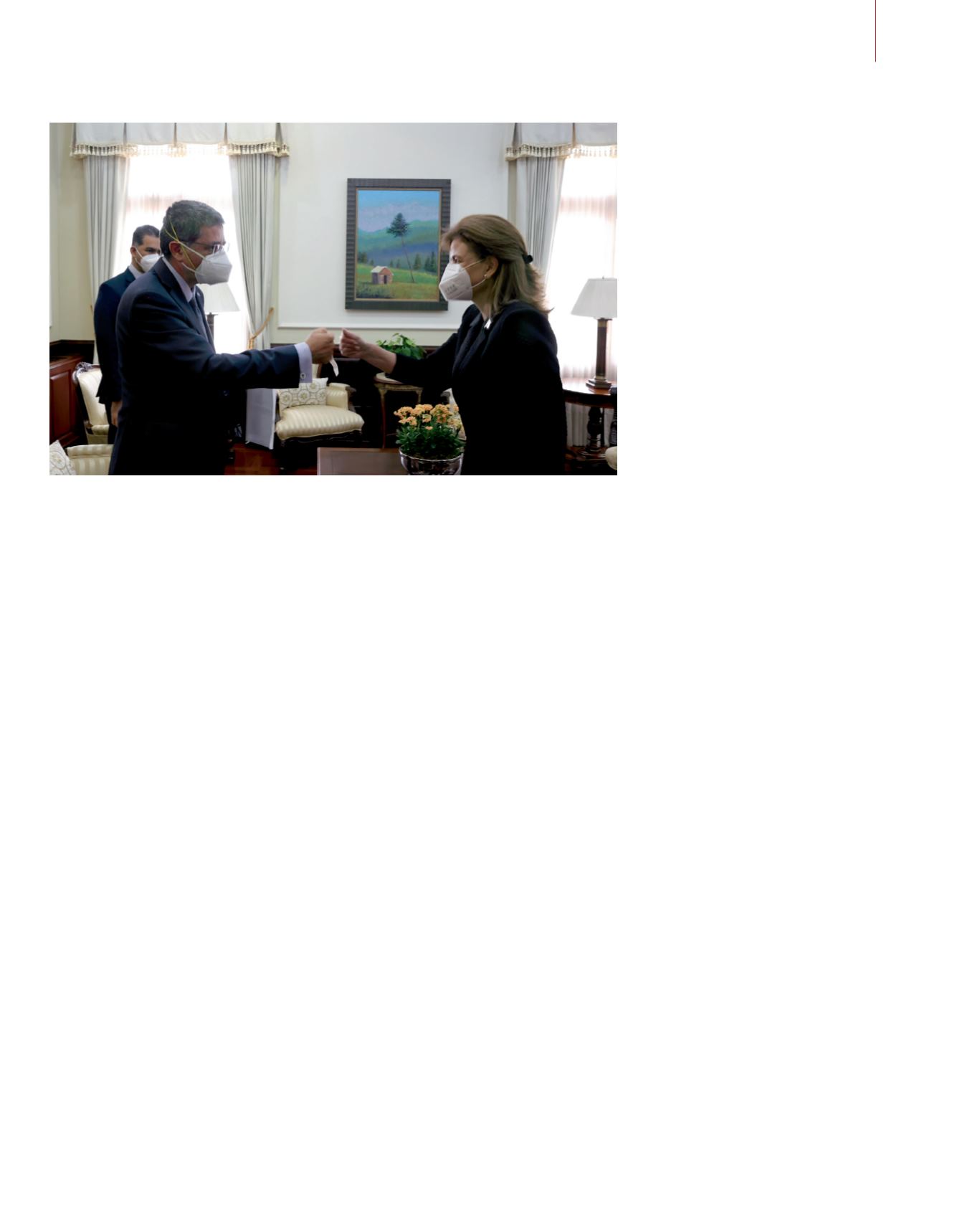
Ambassador of Italy
Andrea Canepari
received in the
presidential palace
by Vice President
Raquel Peña in 2021.
© Courtesy of Presidencia
de la Republica
Dominicana