


 18 / 540


17
talian-Dominican relations have been woven together by virtue of the work of the Italian community that
has settled in the Caribbean country.
This book,
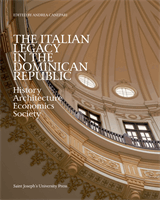
The Italian Legacy in the Dominican Republic. History, Architecture, Economics and Society
, reveals
the salient role played by Italians in the Dominican Republic and, for the first time, systematically highlights
the network of fertile exchanges developed over the centuries between our two countries.
Many Italians have been afforded the opportunity to establish themselves after following pathways in vari-
ous fields such as politics, economics, and culture in the Dominican Republic. Dominican business, education,
publishing, journalism, architecture, and design have therefore and certainly all benefited from the influence
and contribution of our compatriots.
Alessandro Geraldini, first resident bishop, who arrived in the Dominican Republic in 1519, was Italian.
The first chair of Dominican-Italian studies in the Dominican Republic, instituted at the
Pontificia Universidad
Católica Madre y Maestra
(PUCMM), was named after Geraldini, an important humanist.
Giovanni Battista Cambiaso was also Italian. This merchant of Genoese origin, Dominican national hero,
founder of the Dominican Navy, and finally Italian Consul wrote important pages in the history of the Domin-
ican Republic, which in 2020 celebrated the bicentenary of his birth.
In turning the pages of this book, to which important Dominican intellectuals have contributed interesting
essays, the solidity of Italian-Dominican relations—and their still unexpressed potential—become evident.
This project is not only testimony to an important past but also a stimulus for reinforcing the links be-
tween our two countries.
Luigi Di Maio
Minister of Foreign Affairs and International Cooperation of the Italian Republic