


 24 / 540


23
raditionally, Dominican historiography has been characterized by emphasizing research and highlight-
ing political and diplomatic aspects, while glossing over or ignoring other facets such as the economic,
social, and cultural. There have been noteworthy exceptions, as is the case with the work of Pedro
Francisco Bonó in the nineteenth century, who documented, among other matters, the country’s social classes.
The final decades of the last century witnessed the emergence of certain historical works that sought to
construct a more global approach to our past, with the work of Harry Hoetink titled
El Pueblo Dominicano
1850 - 1900. Apuntes para su Sociología Histórica
(1971), serving as one of the most eloquent contributions in
terms of explaining the events that occurred in the Dominican Republic during that period.
One of the aspects that has not been given due attention is the role that immigration has played in the
country. This would seem strange, since, with the exception of the indigenous peoples encountered by Chris-
topher Columbus—who were entirely obliterated by the first decades of the sixteenth century—our country
and its people have been shaped by various waves of immigrants who, over the course of time, have left their
respective marks on society.
Although there are monographs that focus on the contributions of immigrants such as the Spaniards, Af-
ricans, Haitians, Middle Eastern peoples, Jews, and others, there is still much to be written, and that should
certainly pose a point of departure for future research, as the historian Frank Moya Pons has highlighted in his
work
La otra historia dominicana
(The Other Dominican History).
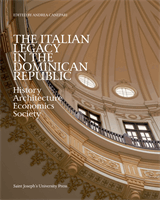
In this sense, the present work,
The Italian Legacy in the Dominican Republic: History, Architecture, Economics
and Society,
will serve as an instrumental and invaluable example for understanding the contributions of immi-
grants who have left deep imprints in the shaping of Dominican society.
Thanks to the enthusiasm and dedication of Ambassador Andrea Canepari—whose fruitful labors over the
course of two years of uninterrupted work have contributed to the strengthening of diplomatic relations—this
text is now available for the general public. The numerous essays contained in this volume are authored by
prominent historians and Dominican and Italian writers, as well as immigrants and their descendants, and
focus on history, architecture, literature, the arts, economics and science, journalism and law, and cultural
institutions, thereby showcasing the contributions made over the course of more than five centuries by people
originating from that Mediterranean peninsula.
The Dominican Academy of History, whose mission is to contribute to the study, understanding and dis-
semination of our past, is delighted that a work of this caliber has finally seen the light of day. It will undoubt-
edly serve to foster a greater understanding of the contributions of the prolific Italian migration and to occupy
a prominent place in modern Dominican historiography.
Congratulations!
José Chez Checo
President of the Dominican Academy of History