


 12 / 540


11
n the life of any nation, historical coordinates trace lasting links, which touch upon the social and cultural
life of its peoples. Over the course of a long pilgrimage of events and developments, the figurative essence
of a nation is forged. We are, to a certain extent, links in a long chain of thought that are inserted within
the heritage of a plural memory, the testimony of formative presences, projects, and common legacies.
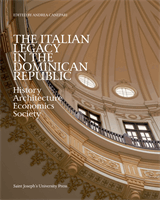
This publication, which is titled
The Italian Legacy in the Dominican Republic: History, Architecture, Economics
and Society
, is an essential contribution to the knowledge and identification of the common links between Italy
and the Dominican Republic. It is not an enumeration of facts or events, but a living and intellectual associa-
tion of the plural processes of historical coalescence, whose illustrative value and contributions of approaches
in various areas add to the recognition of the values of the past and the mobilizing perspectives of the coop-
eration between our peoples, mutually rewarding us with the milestones and cultural breakthroughs that
permeate us with beauty and delight.
Beautifully designed and organized, this work, through its research and analyses, covers the most complex
spaces of culture, from Frank Moya Pons’s “The Italian Presence in Santo Domingo 1492-1900” to a study on
“Italian Immigration to Santo Domingo and to the Southern and Eastern Regions of the Dominican Repub-
lic,” by Antonio Guerra Sánchez, passing through “The Italian Presence in the Cibao Region and in Santiago
de los Caballeros,” by Edwin Espinal Hernández, as well as the essay titled “Christopher Columbus: A Man
between Two Worlds” by Gabriella Airaldi.
The texts on ecclesiastical history contain a wealth of information, with more recent insights provided in
the Homily delivered on September 17, 2019 by Monsignor Francisco Ozoria to commemorate the Quincen-
tennial of the arrival of the First Resident Bishop of Santo Domingo, Monsignor Alejandro Geraldini, who also
spearheaded the construction of the First Cathedral in the Americas. The ensuing chapters focus on the polit-
ical history and historical ties between our peoples, such as the essay by Emilio Rodríguez Demorizi, “Duarte
and Mazzini,” “Diplomatic Relations between Italy and the Dominican Republic,” by Mu-Kien Adriana Sang
Ben and Andrea Canepari, a text by Bernardo Vega on Amadeo Barletta, several essays on Dominican families
of Italian origin, as well as a piece on Ilio Capozzi, the Italian military veteran hired by the Trujillo regime to
train the specialized military corps of “frogmen,” an elite naval force, who died in combat during the events of
the 1965 constitutional revolution.
Foreword
Luis Abinader
President of the Dominican Republic