


 377 / 540

THE ITALIAN LEGACY IN THE DOMINICAN REPUBLIC
376
Antony and Cleopatra
(1913) by Enrico
Guazzoni,
The Last Days of Pompeii
(1913) by Mario Caserini and Eleute-
rio Rodolfi,
Blue Blood
(1914) by Nino
Oxilia, and
L’ereditiera
(1915) by Bal-
dassarre Negroni.
This also made it possible to in-
still admiration for the Italian divas
of silent film in the Dominican peo-
ple, who were already beginning to
choose their favorites, such as actress-
es Francesca Bertini; Giselda Lom-
bardi, better known as Leda Gys;
Lyda “La Divina” Borelli, an icon of
Italian silent film and femme fatale of
her time; and Giuseppa Iolanda Men-
ichelli, known professionally as Pina
Menichelli.
This early approach to the film
world is attributed to Italian business-
man Ciriaco Landolfi, who imported
various film productions through
distribution companies such as Itala
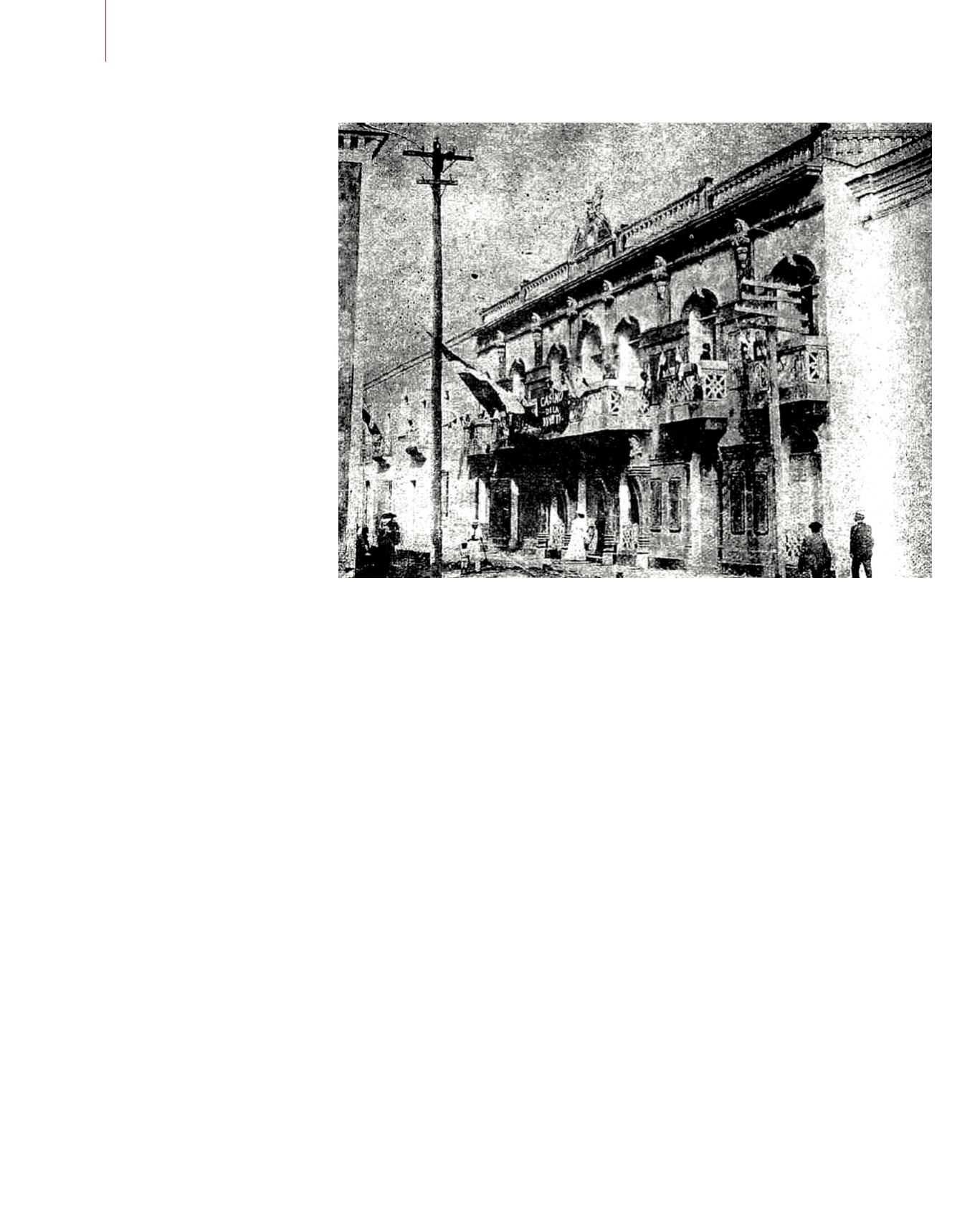
Film and Film d’Art Italiana and presented them on weekends at his theater, Cine Landolfi. Located in the
courtyard of Casino de la Juventud at Calle Padre Billini and Calle Arzobispo Portes, this theater experienced
growing demand that led to the initiation of a schedule with three weekly film showings. It was later remod-
eled by J.B. Alfonseca and renamed the Teatro Colón.
As film presentations in the country boomed, the news reporting profession simultaneously began to
expand among a group of devotees, which included María Electa Stéfani Espaillat (1884–1962), who is con-
sidered the first Dominican filmmaker—a member of the Palau-Alfonseca team—and who collaborated on
the “movie magazines” of the 1920s. She was the daughter of Sofía Espaillat (1857–1895) and Italian engi-
neer Pilade Stefani Virgani (1854–1928); her maternal grandparents were President Ulises Francisco Espaillat
Quiñones (1823–1878) and First Lady Eloísa Espaillat Rodríguez (1818–1919).
Dominican filmmaker Oscar Antonio Torres de Soto (1931–1968) was one of the first Antilleans to receive
a formal education in film at the prestigious Centro Sperimentale di Cinematografia—and can be counted
among figures such as Gabriel García Márquez, Fernando Birri, Julio García Espinosa, and Tomás Gutiérrez
Alea—in Rome in the 1950s. This education enabled him to develop a notable film career in Cuba, Puerto
Rico, and the Dominican Republic.
Years later, in the second half of the 1960s, the Dominican Republic had achieved steady tourism growth, a
circumstance that, along with a surge in local advertising films, prompted some foreign production companies
to film scenes on Dominican soil, taking advantage of the country’s natural backdrop.
By the early 1970s, this had triggered the arrival of a significant wave of Italian producers who had discov-
ered that Dominican scenery provided an excellent setting for police, adventure, horror, and comedy stories,
genres in high demand by Italian audiences also interested in tales set in exotic locales like the Caribbean.
In 1974, the Italian-German-Spanish film
Order to Kill
—directed by José Gutiérrez Maesso and starring
Helmut Berger, Sydne Rome, and José María Caffarel—was produced.
Italian director Osvaldo Civirani also filmed two Dominican-Italian action and adventure productions en-
The “Casino de la
Juventud,” located
in Padre Billini to
Archbishop Portes
Street (where
currently is housed the
Dominican Association
of Engineers,
Architects and
Surveyors), operated
the Landolfi Theater,
owned by the Italian
businessman Ciriaco
Landolfi, a venue
in the city of Santo
Domingo dedicated
to the latest in film
entertainment.
© Public domain